Iowa DMV Sign Test 3

4.8 out of 5 (52 votes)
80% Passing score
20 Questions
4 Mistakes allowed
For a standard Iowa Class C instruction permit, road signs are not tested in some neat, separate little bubble. They are part of the regular Iowa operator knowledge test, which means sign questions sit alongside the rest of the driving rules and count toward the same score. That matters more than people sometimes think. The official knowledge test has 35 questions, and the practical limit is 7 missed questions total, so a few careless sign mistakes can do real damage. This Iowa road signs test gives you focused practice on the material most likely to trip people up because, frankly, signs look simple until they start overlapping with lane rules, work zones, railroad crossings, pavement markings, and traffic signals. You will see regulatory signs, warning signs, guide and service signs, route markers, work-zone devices, lane-control markings, and the usual shape-and-color clues drivers are expected to recognize without a long internal debate. The octagon, the triangle, and the rectangle are the obvious ones (or are they?). But the real value is getting comfortable with how Iowa DOT-style questions ask about them. The test includes 20 road-sign-focused questions with images, which is exactly how this material should be practiced. Signs are visual. You do not really learn them by staring at a paragraph and hoping the meaning sticks. You learn them by seeing the symbol, noticing the shape, connecting it to the rule, and doing that enough times that recognition gets quicker and less wobbly. For younger drivers, Iowa allows an instruction permit at age 14, assuming the applicant passes the knowledge and vision tests, has parent or guardian written consent, and brings the required identity, residency, and Social Security documentation. Applicants under 18 may take the knowledge test at a DMV or county treasurer location, through Iowa DOT’s parent-proctored Skip the Trip option, or through a participating school or agency. The at-home version still has rules attached — the student must be close enough to the 14th birthday window, under 18, using an approved internet-connected device, and supervised by a parent or guardian with a valid Iowa driver’s license. After passing, there is still an office visit before the permit is issued. Adult first-time applicants have their own paperwork-and-testing path, including proof of identity, residence, Social Security number, vision screening, written testing, and a driving test when required. So this Iowa DOT practice test is not the whole licensing process. It is a focused piece of preparation for a very testable part of it — road signs, markings, and the visual rules Iowa expects you to know.
FREE DMV Practice Test App
Study for your Iowa permit test or driver’s license with the NextDoorDriving app. 700+ DMV questions and answers, 100% free!
Download on the App Store

Sample Iowa Permit Test Questions

Question 1

Orange traffic signs and warning devices alert drivers to:

  1. A. Permanent road closures only
  2. B. Road work, temporary traffic changes, or workers
  3. C. Ordinary speed-limit zones
  4. D. High-occupancy vehicle lanes

Correct answer: B. – Road work, temporary traffic changes, or workers

Orange signs and warning devices identify road work, maintenance, utility operations, and temporary traffic-control conditions. Work areas may include changing lane patterns, equipment, or workers near the roadway. Stay alert, adjust your speed to traffic conditions, and follow all signs, signals, and flagger instructions.

Source: Iowa Driver’s License Manual — Ch. 2, § 2.1, “Traffic Signs”, Iowa Driver’s License Manual — Ch. 2, § 2.11, “Work Zones”
Question 2

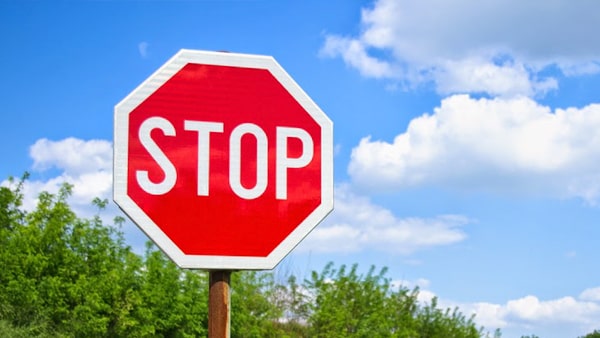
What must you do at a red, eight-sided STOP sign?

When you see this sign, you must:
  1. A. Come to a full stop, yield to pedestrians and cross traffic, and proceed when safe
  2. B. Slow down and continue if no vehicle is directly ahead
  3. C. Stop and wait for a green traffic signal
  4. D. Yield only to vehicles approaching from the left

Correct answer: A. – Come to a full stop, yield to pedestrians and cross traffic, and proceed when safe

In Iowa, a stop sign requires a complete stop at the marked stop line, before the crosswalk, or at the required point before entering the intersection. Before proceeding, yield to traffic already in or approaching the intersection closely enough to be an immediate hazard. Make sure the crosswalk is clear and continue only when safe.

Source: Iowa Code § 321.322(1) – Vehicles entering stop or yield intersection, Iowa Driver’s License Manual — Ch. 2, § 2.2, “Regulatory Signs”

Question 3

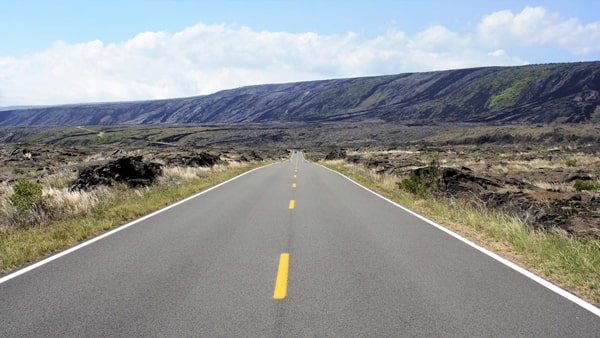
On a two-way road, a broken yellow line on your side of the center marking means:

A broken yellow center line on the roadway means:
  1. A. Passing is prohibited from your lane
  2. B. You may pass on the left when the maneuver is permitted and safe
  3. C. Traffic ahead must reduce speed
  4. D. Left turns are prohibited

Correct answer: B. – You may pass on the left when the maneuver is permitted and safe

Yellow center markings separate traffic moving in opposite directions. When a solid and broken yellow pair is present, traffic on the broken-line side may pass when it is safe. Before crossing the center marking, verify that signs and markings permit passing and that there is enough clear space to complete the maneuver.

Source: Iowa Driver’s License Manual — Ch. 2, § 2.12, “Pavement Markings and Other Lane Controls”, Iowa Driver’s License Manual — Ch. 4, § 4.10, “Passing”

Question 4

What does a double solid yellow center line indicate?

  1. A. Drivers may cross it to enter any driveway
  2. B. Passing across the center line is prohibited in both directions
  3. C. The space between the lines is a left-turn lane
  4. D. Traffic on either side travels in the same direction

Correct answer: B. – Passing across the center line is prohibited in both directions

A double yellow center line separates opposing traffic and prohibits passing in either direction. Iowa’s manual illustrates this marking as a no-passing line for traffic on both sides. It is different from a shared left-turn lane, which uses a combination of solid and dashed yellow lines on each side.

Source: Iowa Driver’s License Manual — Ch. 4, § 4.10, “Passing”, Iowa Driver’s License Manual — Ch. 2, § 2.16, “Shared Left-Turn Lane”

Question 5

At an intersection, a red-and-white triangular sign requires you to:

  1. A. Stop only when an emergency vehicle approaches
  2. B. Continue at the same speed if the road appears clear
  3. C. Always make a complete stop
  4. D. Slow down, yield, and stop if safety requires it

Correct answer: D. – Slow down, yield, and stop if safety requires it

The triangular sign is a yield sign. In Iowa, a driver approaching it must slow to a reasonable speed and stop if necessary for safety. The driver must yield to vehicles that are already in the intersection or are close enough to create an immediate hazard.

Source: Iowa Code § 321.322(2) — Vehicles entering stop or yield intersection, Iowa Driver’s License Manual — Ch. 2, § 2.2, “Yield Sign”

Question 6

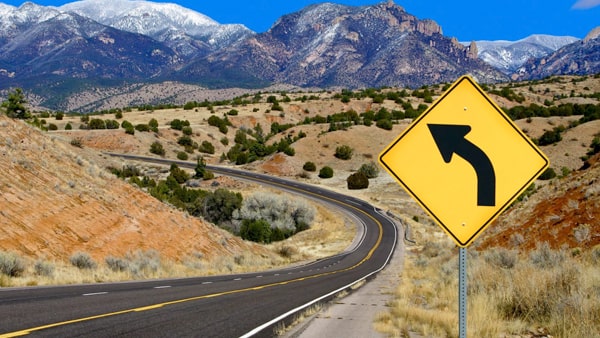
A yellow diamond sign showing a black arrow bending to the left warns of:

This sign is used to warn drivers about:
  1. A. A crossroad ahead
  2. B. A road-work area
  3. C. A left curve ahead
  4. D. A lane ending ahead

Correct answer: C. – A left curve ahead

This warning sign indicates that the roadway gradually changes direction to the left. Warning signs alert drivers to conditions that may require a change in speed or position. Reduce speed as conditions require and be prepared to follow the curve safely.

Source: Iowa Driver’s License Manual — Ch. 2, § 2.3, “Warning Signs”