Iowa Drivers Ed Practice Test 8

5 out of 5 (58 votes)
80% Passing score
20 Questions
4 Mistakes allowed
Iowa’s permit process is not just a matter of reading a few signs, clicking through a quiz, and calling it good. The Iowa drivers permit test is built around rules you actually have to use—right-of-way at four-way stops, lane choices, signs, signals, safe following distance, and all those small judgment calls that seem obvious until the question slows you down and makes you think about the exact rule. This Iowa DMV practice test gives you 20 multiple-choice questions modeled around the style and subject matter of the Iowa DOT knowledge test. The questions are not lifted from the real exam, and honestly, that would not help as much as people think. What matters is learning how Iowa asks about driving laws, how the wording tends to frame everyday road situations, and how to spot the rule underneath the scenario. That is where a good Iowa drivers license practice test earns its keep. Each answer includes immediate feedback with an explanation, not just a quick “correct” or “wrong” and then off you go. You see why the right answer works, why the other choices fall apart, and where the Iowa rule fits into actual driving. It is a little less glamorous than just chasing a passing score, sure, but it is the part that helps the information stick. And Iowa licensing has a few details worth knowing before you get too far into the process. In 2024, the Special Minor’s Restricted License replaced the former Minor School License, so younger drivers are dealing with updated rules for certain school and work driving privileges. Under-18 applicants may also be required to take a drive test if their driver education instructor requests it or if they completed Iowa DOT’s parent-taught driver education program. So, yes, the written test is important. It is also one piece of a larger system. The road test has its own checklist, too. Iowa DOT expects the vehicle to pass inspection before the drive begins, including valid plates, current registration and insurance, working turn signals, brake lights, horn, seat belts, mirrors, and doors that open normally. Small stuff, except not really, because any one of those things can interrupt the day before the driving part even starts. This free drivers ed practice test is also useful for out-of-state minors moving to Iowa. Depending on the permit or license they already hold, they may still need to pass the Iowa operator knowledge test, complete Iowa-approved driver education, and meet Iowa’s permit-holding and clean-record requirements. In other words, Iowa wants you prepared on Iowa’s terms—and this practice drivers ed test is a clean place to start.
FREE DMV Practice Test App
Study for your Iowa permit test or driver’s license with the NextDoorDriving app. 700+ DMV questions and answers, 100% free!
Download on the App Store

Sample Iowa Permit Test Questions

Question 1

A driver extends the left hand and arm upward. What maneuver is being signaled?

  1. A. A left turn
  2. B. A right turn
  3. C. A stop or decrease in speed
  4. D. Continued travel straight ahead

Correct answer: B. – A right turn

An upward left-arm signal indicates a right turn. A left arm extended horizontally indicates a left turn. A left arm extended downward communicates a stop or decrease in speed.

Source: Iowa Code § 321.318 — Method of giving hand and arm signals.
Question 2

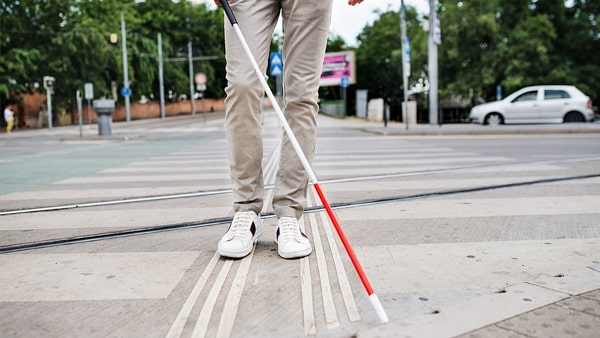
What must an Iowa driver do when approaching a blind pedestrian using a white or red-tipped white cane or a harnessed guide dog?

When driving near a blind pedestrian who is carrying a white cane or using a guide dog, you should:
  1. A. Come to a complete stop and take precautions against injury
  2. B. Proceed first if the vehicle has the right-of-way
  3. C. Continue normally while sounding the horn
  4. D. Accelerate past before the pedestrian enters the lane

Correct answer: A. – Come to a complete stop and take precautions against injury

The driver must immediately come to a complete stop when approaching or encountering the described pedestrian. The driver must also take precautions necessary to prevent an accident or injury. The rule applies to a person who is wholly or partially blind and uses the specified cane or a harnessed guide dog. A violation is punishable by a fine of $1 to $100.

Source: Iowa Code § 321.333 — Duty of drivers., Iowa Code § 321.334 — Penalties.

Question 3

What traffic concern do minimum-speed rules address?

  1. A. Unreasonably slow vehicles impeding normal traffic movement
  2. B. Changes in local weather and pavement conditions
  3. C. The timing of future traffic signals
  4. D. Pedestrian activity near intersections

Correct answer: A. – Unreasonably slow vehicles impeding normal traffic movement

Iowa prohibits driving so slowly that you impede or block the normal and reasonable movement of traffic. An exception applies when a reduced speed is necessary for safe operation or compliance with the law. Posted minimum speeds identify the lowest permitted speed under normal conditions; drivers unable to travel safely at that speed should choose another route.

Source: Iowa Code § 321.294 — Minimum speed regulation., Iowa Driver’s License Manual — Ch. 2, § 2.2, “Speed Limit Signs”

Question 4

Which practice is an example of defensive driving?

  1. A. Maintaining exactly one car length at every speed
  2. B. Watching only the vehicle directly ahead
  3. C. Scanning ahead, checking mirrors, and keeping your eyes moving
  4. D. Using all of these practices

Correct answer: C. – Scanning ahead, checking mirrors, and keeping your eyes moving

A defensive driver scans conditions well ahead, checks mirrors frequently, and keeps the eyes moving. Focusing only on the vehicle directly ahead can cause you to miss hazards elsewhere. A fixed one-car-length gap is also unreliable because an appropriate following distance changes with speed, traffic, visibility, and road conditions.

Source: Iowa Driver’s License Manual — Ch. 4, § 4.11, “Defensive Driving”, Iowa Driver’s License Manual — Ch. 4, § 4.4, “Safe Following Distance”

Question 5

What is the recommended way to look behind your vehicle while backing?

When backing up your car, you should:
  1. A. Depend entirely on the inside and outside mirrors
  2. B. Turn and look over your right shoulder through the rear window while backing slowly
  3. C. Look only over your left shoulder while accelerating
  4. D. Watch only the backup-camera display

Correct answer: B. – Turn and look over your right shoulder through the rear window while backing slowly

Backing should be performed slowly because vehicle control and visibility are reduced in reverse. Turn your body and look over your right shoulder through the rear window for a direct view behind the vehicle. Check all areas behind you and the blind spots before moving, and do not depend on mirrors or a backup camera alone.

Source: Iowa Driver’s License Manual — Ch. 4, § 4.7, “Backing”

Question 6

If dense fog makes it unsafe to continue driving, what is the best action?

  1. A. Leave the roadway and find a safe place to park
  2. B. Maintain highway speed to avoid being struck from behind
  3. C. Alternate continuously between low and high beams

Correct answer: A. – Leave the roadway and find a safe place to park

In fog, use low-beam headlights or fog lights and reduce your speed to match the distance you can see. High beams reflect from the fog and create glare that further reduces visibility. If conditions make continued travel unsafe, get off the roadway and find a safe place to park.

Source: Iowa Driver’s License Manual — Ch. 5, § 5.13, “Fog”