


Iowa DMV Sign Test 4

4.8 out of 5 (57 votes)
80% Passing score
20 Questions
4 Mistakes allowed
A lot of Iowa permit prep goes wrong in one very predictable place: drivers study road signs like they are just flashcards, then meet them again on the knowledge test wrapped inside real driving decisions. Iowa road signs are part of the full operator knowledge test, not a separate little road-sign quiz tucked off to the side. That matters, because sign questions count the same way as questions about traffic laws, right-of-way, lane markings, alcohol laws, safe driving, and all the other material pulled from the Iowa Driver’s License Manual. So yes, this Iowa road signs test focuses heavily on signs — but it is built with the real Iowa permit knowledge test in mind, where those signs appear alongside everything else Iowa DOT expects you to know before issuing an instruction permit. This Iowa drivers license practice test gives you direct practice with the signs and visual rules that tend to show up in some form on the exam: regulatory signs, warning signs, guide signs, route markers, service signs, work-zone devices, railroad crossings, traffic signals, pavement markings, and lane controls. Some of it is basic, sure. Red means stop, green means go, yellow means pay attention before the situation becomes less fun. But the test also checks whether you know what a sign is telling you to do next, which is where people sometimes get a little too casual and then, well, there goes another missed question. For the real Iowa learner permit test, Iowa DOT states that you need an 80% score to pass. The commonly reported format is 35 questions, with 28 correct answers needed, meaning you can miss up to 7 total questions. Iowa DOT’s official practice test uses 25 randomly selected sample questions from a larger pool that includes real-test material, so varied practice is not just nice to have. It is the point. This Iowa permit practice test is a practical fit for first-time drivers studying for an instruction permit, including teens who may apply as early as age 14, and for adults who need to take or review the knowledge test. It also works as a DOT signs practice test for drivers brushing up before renewal or getting comfortable again after time away from Iowa roads. Hints are available when a question starts looking less obvious than it should, and missed answers include explanations—not just a red X and a shrug. That extra explanation is where the studying actually happens, especially when you are trying to read signs quickly on a rural highway, through Des Moines traffic, near a railroad crossing, or in one of those work zones that seems to appear exactly when you thought the drive would be simple.
FREE DMV Practice Test App
Study for your Iowa permit test or driver’s license with the NextDoorDriving app. 700+ DMV questions and answers, 100% free!
Download on the App Store

Sample Iowa Permit Test Questions

Question 1

Yellow pavement lines generally separate:

  1. A. A center turn lane from through lanes
  2. B. Bicycle lanes from motor-vehicle lanes
  3. C. Lanes moving in the same direction
  4. D. Traffic moving in opposite directions

Correct answer: D. – Traffic moving in opposite directions

Yellow lines divide traffic traveling in opposite directions, while white lines generally divide lanes moving in the same direction. A solid yellow line on your side also indicates that you may not cross the center marking to pass. Always follow the particular combination of solid and broken markings present.

Source: Iowa Driver’s License Manual — Ch. 2, § 2.12, “Pavement Markings and Other Lane Controls”, Iowa Driver’s License Manual — Ch. 4, § 4.10, “Passing”
Question 2

A steady yellow signal appears as you approach an intersection. When may you continue through?

  1. A. Whenever no pedestrians are visible
  2. B. Whenever you intend to turn right
  3. C. Whenever you are traveling at the speed limit
  4. D. When you cannot stop safely before entering

Correct answer: D. – When you cannot stop safely before entering

Iowa law requires drivers facing a steady yellow signal to stop rather than enter the intersection. If the stop cannot be made safely, the vehicle may proceed cautiously through the intersection. A yellow light is not permission to accelerate in an attempt to beat the red signal.

Source: Iowa Code § 321.257(2)(b) — Official traffic-control signal, Iowa Driver’s License Manual — Ch. 2, § 2.9, “Traffic Signals”

Question 3

A green arrow displayed with a red circular signal allows you to:

  1. A. Travel straight through the intersection
  2. B. Proceed only in the direction shown by the arrow
  3. C. Wait until the circular signal turns green
  4. D. Choose any direction after stopping

Correct answer: B. – Proceed only in the direction shown by the arrow

A steady green arrow authorizes traffic to proceed in the arrow’s direction even when another signal is red. Do not drive straight unless a signal permits that movement. You must still yield to vehicles and pedestrians lawfully within the intersection.

Source: Iowa Code § 321.257(2)(d) — Official traffic-control signal, Iowa Driver’s License Manual — Ch. 2, § 2.9, “Traffic Signals”

Question 4

What color combination is normally used for warning signs showing conditions such as curves or narrow bridges?

  1. A. Black symbols on a white background
  2. B. Black symbols on a yellow background
  3. C. White symbols on a blue background
  4. D. White symbols on a green background

Correct answer: B. – Black symbols on a yellow background

General warning signs are yellow with black lettering or symbols, and most are diamond-shaped. They alert drivers to a special roadway condition or hazard ahead. Orange is reserved for road work and temporary traffic-control warnings, while white is commonly used for regulatory signs.

Source: Iowa Driver’s License Manual — Ch. 2, § 2.1, “Traffic Signs”, Iowa Driver’s License Manual — Ch. 2, § 2.3, “Warning Signs”

Question 5

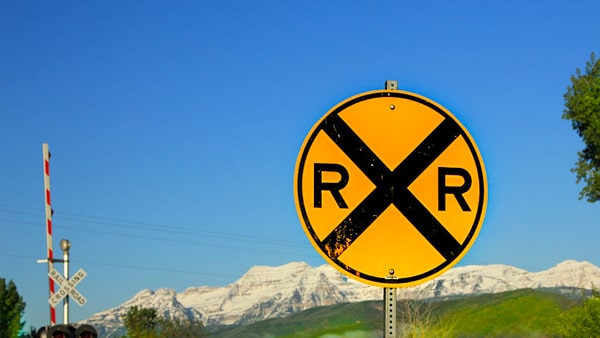
A round yellow sign with a black “X” and the letters “RR” warns that you are approaching:

This sign is a warning that you are approaching:
  1. A. A crossroad
  2. B. A pedestrian crossing
  3. C. A railroad crossing
  4. D. A work zone

Correct answer: C. – A railroad crossing

A circular sign warns that railroad tracks cross the road ahead. Begin looking and listening for trains as you approach, and never stop on the tracks. Railroad advance-warning signs appear before the crossbuck or any lights and gates located at the crossing.

Source: Iowa Driver’s License Manual — Ch. 2, § 2.1, “Standard Shapes”, Iowa Driver’s License Manual — Ch. 2, § 2.10, “Railroad Crossings”

Question 6

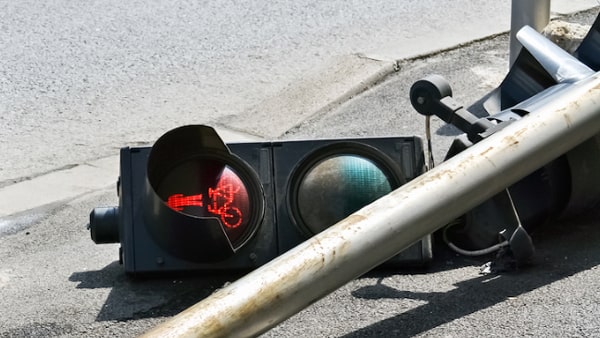
An Iowa DOT message reads “SIGNAL NOT WORKING—STOP AHEAD.” What should you do?

When a traffic signal light is not working, you should:
  1. A. Stop only when another vehicle is present
  2. B. Slow down without stopping
  3. C. Stop, then proceed when the intersection is safe
  4. D. Continue as though the signal were green

Correct answer: C. – Stop, then proceed when the intersection is safe

The official message directs approaching drivers to stop because the traffic signal is not operating. After stopping, check that crossing vehicles and the crosswalk are clear before entering. Continue only when you can proceed safely and without interfering with other road users.

Source: Iowa Code § 321.256 — Obedience to official traffic-control devices, Iowa DOT Traffic & Safety Manual — Ch. 2E, § 2E-1, “Guidelines for Portable CMS”, Iowa Driver’s License Manual — Ch. 2, § 2.2, “Stop Sign”