New York DMV Sign Test 3

4.8 out of 5 (211 votes)
80% Passing score
20 Questions
4 Mistakes allowed
On the NY DMV permit test, signs have their own scoring wrinkle. The written knowledge test has 20 multiple-choice questions, and 4 of those questions are about road signs. You need at least 14 correct answers overall to pass, but you also need at least 2 correct answers from the road-sign questions. Miss that requirement and the rest of your score may not save you. This NY road signs test gives you concentrated practice on that specific part of the New York written test. It follows the sign material covered in the New York State Driver’s Manual, which is the official source for the exam, but it turns that material into active practice instead of quiet page-reading and hopeful confidence. And, honestly, that distinction matters. Road signs are partly about memory, yes, but they are also about fast recognition: shape, color, symbol, wording, and context all working together before you have time to overthink it. The questions may touch on the familiar signs first — stop, yield, school zones, railroad crossings — but the real value is in getting comfortable with the ones that blend together if you have not reviewed them properly. Warning signs, regulatory signs, guide signs, lane-use signs, turn restrictions, divided-highway signs, and other sign types from the manual can all show up in some form. This New York DMV road signs practice test includes 20 questions to help you sort those details out before the official test, whether you are applying for a standard Class D permit, a junior Class DJ permit, or another New York learner permit that requires the written knowledge exam. Under-18 applicants can apply for a learner permit at age 16 or older and usually work toward a junior learner permit. Adults follow the standard permit-to-license process, including the written test, vision test, required fee, pre-licensing course or qualifying driver education course, and road test. The paperwork may differ a bit, but the road-sign knowledge does not get waived just because your path looks different. Use this DMV practice test with the official manual. Hints help when a question catches, explanations turn missed answers into something useful, and the final score summary shows which signs are already solid and which ones need another look.
FREE DMV Practice Test App
Study for your New York permit test or driver’s license with the NextDoorDriving app. 700+ DMV questions and answers, 100% free!
Download on the App Store

Sample New York Permit Test Questions

Question 1

What should you do when a steady traffic signal changes to yellow as you approach?

  1. A Continue at the same speed
  2. B Yield to vehicles on the cross street
  3. C Be prepared to stop because the signal is changing to red
  4. D Stop immediately regardless of your position

Correct answer: C – Be prepared to stop because the signal is changing to red

A steady yellow signal warns that the green movement is ending and a red indication will follow immediately. The driver's manual instructs approaching drivers to be prepared to stop. Yellow is a warning rather than an instruction to accelerate through the intersection.

Source: N.Y. VTL § 1111(b)(1) – Traffic-control signal indications, New York State Driver's Manual — Ch. 4, “Traffic Lights—Steady Yellow”

Question 2

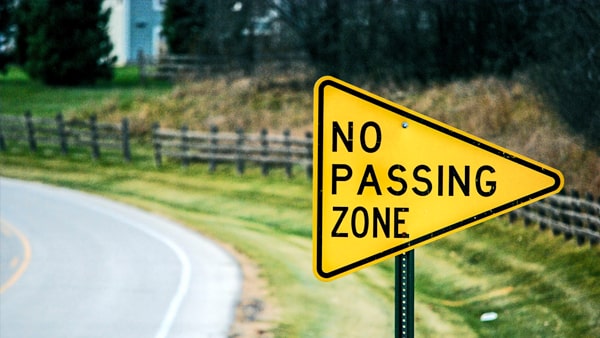
A yellow pennant-shaped sign placed on the left side of the road marks:

The sign with this shape and color is a _____________ sign.
  1. A The beginning of a no-passing zone
  2. B A wrong-way entrance
  3. C A railroad crossing
  4. D A required stop

Correct answer: A – The beginning of a no-passing zone

The No Passing Zone sign is a yellow, pennant-shaped warning sign. When used, it is installed on the left side of the roadway at the beginning of a no-passing zone identified by pavement markings, Do Not Pass signs, or both. Its unique shape helps drivers recognize the restriction quickly.

Source: Manual on Uniform Traffic Control Devices, 11th ed. — § 2C.53, “NO PASSING ZONE Sign (W14-3)”

Question 3

A broken yellow line is next to your lane, paired with a solid yellow line. When may you pass?

When the road is marked with a solid yellow line and a broken yellow line on your side you may pass:
  1. A Only to avoid an emergency
  2. B Only while driving on an expressway
  3. C When the pass is safe and will not interfere with traffic
  4. D Only while traveling through an intersection

Correct answer: C – When the pass is safe and will not interfere with traffic

In New York, the driver beside the broken yellow line may pass when the maneuver is safe and will not interfere with traffic. A driver traveling on the side with the solid line may not cross it to pass. Always evaluate sight distance, oncoming traffic, and available space before beginning the maneuver.

Source: New York State Driver's Manual — Ch. 4, “Pavement Markings—Edge and Lane Lines”

Question 4

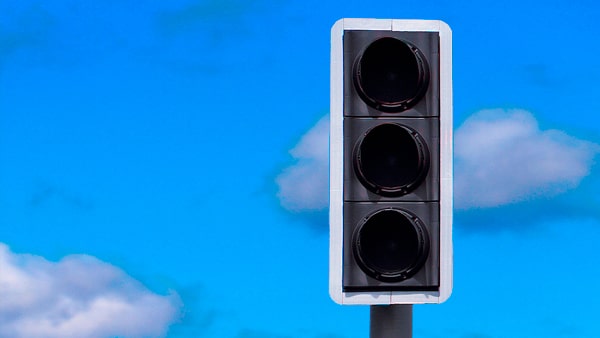
On a standard vertical traffic signal, what is the color order from top to bottom?

From top to bottom, the following is the proper order for traffic lights:
  1. A Red, yellow, green
  2. B Red, green, yellow
  3. C Green, red, yellow
  4. D Green, yellow, red

Correct answer: A – Red, yellow, green

Traffic lights are normally arranged red, yellow, and green from top to bottom. On a horizontal signal, the same colors normally appear from left to right. This standardized placement helps drivers identify an indication even when visibility or color recognition is limited.

Source: New York State Driver's Manual — Ch. 4, “Traffic Lights”

Question 5

What do yellow center lines normally separate?

  1. A Traffic moving in opposite directions
  2. B Lanes moving in the same direction
  3. C The travel lane from the right shoulder
  4. D A through lane from a bicycle lane

Correct answer: A – Traffic moving in opposite directions

Yellow lines separate lanes of traffic moving in opposite directions. The line may be solid, broken, or used in a combination that indicates where passing is restricted or permitted. White lines generally separate lanes of traffic moving in the same direction.

Source: New York State Driver's Manual — Ch. 4, “Pavement Markings—Edge and Lane Lines”

Question 6

A solid white right-edge line gradually angles toward the center of the roadway. What does this indicate?

  1. A An intersection is immediately ahead
  2. B A work zone begins
  3. C All traffic must turn left
  4. D The roadway becomes narrower ahead

Correct answer: D – The roadway becomes narrower ahead

A solid edge line marks where the travel lane ends and the shoulder or roadside area begins. When that line angles toward the center of the roadway, it shows that the roadway becomes narrower ahead. The marking alone does not indicate a required turn or prove that a work zone is present.

Source: New York State Driver's Manual — Ch. 4, “Pavement Markings—Edge and Lane Lines”