


South Carolina Practice Permit Test 4

4.8 out of 5 (97 votes)
80% Passing score
20 Questions
4 Mistakes allowed
Getting ready for the South Carolina DMV permit test means dealing with two separate things at once: the driving rules you actually need to know, and the very particular way the test likes to ask about them. This SC driving permit practice test gives you a cleaner, shorter way to rehearse before you head to an SCDMV branch, where the real beginner’s permit knowledge test is taken in person — and, small but important detail, before 4 p.m. Because apparently knowledge has office hours. The official Class D beginner’s permit test is based on the South Carolina Driver’s License Manual, so the questions can reach into traffic laws, road signs, signals, pavement markings, safe driving, sharing the road, alcohol and drug rules, and general driver responsibility. The real test has 30 multiple-choice questions, and you need 24 correct answers to pass. That is 80%, or, less pleasantly, only 6 misses before things get a little quiet at the counter. This practice permit test has 20 multiple-choice questions, which makes it easier to work through without turning the whole afternoon into a government-document reading retreat. There are a few licensing details worth keeping straight, even if they are not thrilling dinner conversation. South Carolina charges $2.00 for the knowledge test and $2.50 for the beginner’s permit after you pass. Teens can apply at 15, but applicants under 18 need an authorized adult to sign the application. A teen with no previous driving experience must hold the permit for at least 180 days before becoming eligible for the road test or a teen restricted license. Adults applying for the first time also start with a beginner’s permit, though they may move toward the road test after holding it for at least 30 days. This South Carolina permit practice test also gives extra attention to the stuff people tend to skim, including road signs, safe-driving judgment, and child passenger safety. Road signs are not separated into their own special Class D road-sign test in South Carolina; they are folded into the regular 30-question knowledge test. So they count, quietly and efficiently, like all the other details you were hoping would stay optional. The hints and answer explanations are where this SC DMV permit practice test earns its keep. A hint can nudge you when a question stalls out, and a missed answer comes with an explanation so you know what went wrong instead of just being politely informed that, no, that was not it. At the end, the score summary shows what you missed, making review a lot less vague and a lot more useful before the real permit test.
FREE DMV Practice Test App
Study for your South Carolina permit test or driver’s license with the NextDoorDriving app. 700+ DMV questions and answers, 100% free!
Download on the App Store

Sample South Carolina Permit Test Questions

Question 1

Another vehicle moves into the space directly ahead of you. What is the best initial response?
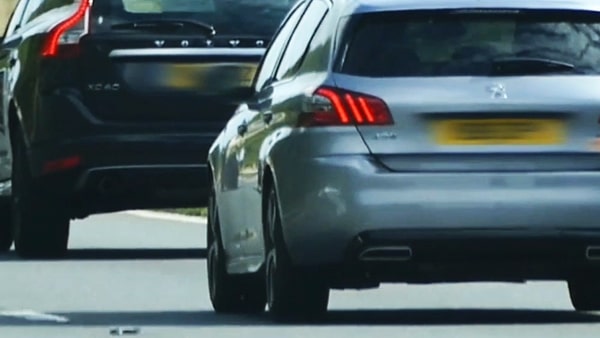
If another driver "cuts" in front of you, it would be better if you:
  1. A Ease off the accelerator and rebuild a safe following distance
  2. B Brake abruptly even if the vehicle continues moving
  3. C Accelerate to prevent the vehicle from entering your lane
  4. D Sound the horn continuously

Correct answer: A – Ease off the accelerator and rebuild a safe following distance

Ease off the accelerator to slow gradually and restore adequate space behind the vehicle that entered your lane. Abrupt braking or acceleration can create additional conflict with vehicles ahead or behind. The driver’s manual explains that a larger space cushion provides more time to react and recommends a minimum four-second following distance under normal conditions.

Source: South Carolina Driver’s Manual — § 8, “Space Management—Providing an Adequate Following Distance”
Question 2

Which statement does not describe an effect of drinking alcohol?

  1. A It slows reaction and information-processing time
  2. B It reduces the ability to judge speed and distance
  3. C It impairs judgment and awareness
  4. D It improves concentration and decision-making

Correct answer: D – It improves concentration and decision-making

Alcohol reduces judgment, interferes with vision, and slows the ability to process information and respond while driving. It can make judging distance, speed, and vehicle movement more difficult. It does not improve concentration or decision-making, and impairment can begin with the first drink.

Source: South Carolina Driver’s Manual — § 3, “Effects of Alcohol and Other Impairing Drugs”

Question 3

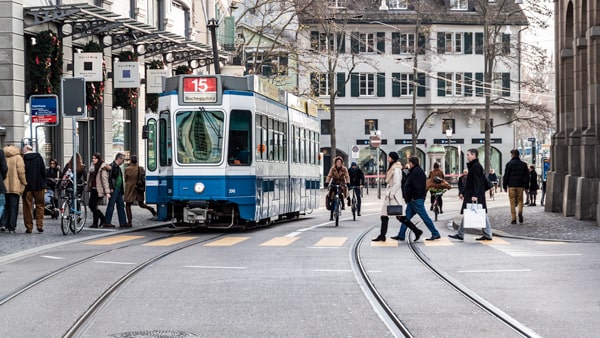
At a South Carolina signalized intersection near railroad tracks, what may happen when a train approaches?

Which of these statements is true about light rail vehicles?
  1. A A special sequence may interrupt normal traffic-signal operation
  2. B Motorists must always pass the train on its right
  3. C Rail equipment is not considered part of traffic
  4. D Road vehicles always have priority over the train

Correct answer: A – A special sequence may interrupt normal traffic-signal operation

Railroad preemption allows an approaching train to trigger a special traffic-signal sequence. This sequence may clear vehicles from the track area and restrict movements that would conflict with the train. Drivers must follow the displayed signal and stop before the tracks when traffic or a signal prevents them from clearing the crossing.

Source: SCDOT Traffic Signal Design Guidelines — Ch. 5, “Railroad Preemption”, South Carolina Driver’s Manual — § 6, “Highway-Railroad Grade Crossings”

Question 4

In a South Carolina business or residential district, what must a driver do when leaving a driveway, crossing a sidewalk, and entering the roadway?

  1. A Sound the horn and enter before approaching traffic
  2. B Stop with the front of the vehicle blocking the sidewalk
  3. C Accelerate quickly into the nearest traffic gap
  4. D Stop before the sidewalk and yield to pedestrians and roadway traffic

Correct answer: D – Stop before the sidewalk and yield to pedestrians and roadway traffic

A driver emerging from a driveway in a business or residential district must stop before driving onto the sidewalk area and yield to pedestrians as necessary to avoid a collision. Before entering the roadway, the driver must also yield to approaching vehicles. Do not block the sidewalk while waiting for an opening in traffic.

Source: S.C. Code § 56-5-2745 – Emerging from alley, driveway, or building, S.C. Code § 56-5-2350 – Vehicle entering roadway

Question 5

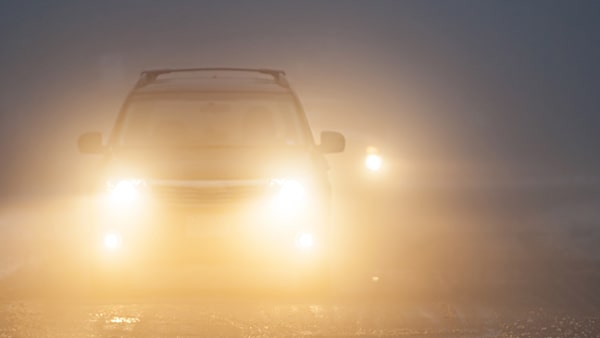
Besides nighttime, when must headlights be used in South Carolina?

When should you use your headlights while driving?
  1. A Only after the sun has fully set
  2. B During rain requiring wipers and when adverse conditions substantially reduce visibility
  3. C Only during the 30 minutes before sunset
  4. D Only after another driver flashes headlights at you

Correct answer: B – During rain requiring wipers and when adverse conditions substantially reduce visibility

Required vehicle lights must be displayed from one-half hour after sunset until one-half hour before sunrise. They are also required when windshield wipers are in use because of rain, sleet, or snow and when insufficient light or adverse atmospheric conditions reduce visibility. In rain or fog, use low beams because high beams may produce glare.

Source: S.C. Code § 56-5-4450 – Times when vehicles must be equipped with lights, South Carolina Driver’s Manual — § 8, “Letting Others Know You Are There”, South Carolina Driver’s Manual — § 11, “Night Driving”

Question 6

Alcohol can impair the brain-centered ability used to apply experience when a new driving problem arises. What is that ability?

  1. A Steering technique
  2. B Good judgment
  3. C Muscle strength
  4. D Foot speed

Correct answer: B – Good judgment

Judgment is the mental ability that lets a driver apply knowledge and experience when facing a new traffic situation. Alcohol reduces judgment along with vision and reaction time. Because impairment begins with the first drink, a driver should not treat a small amount of alcohol as harmless to safe decision-making.

Source: South Carolina Driver’s Manual — § 3, “Effects of Alcohol and Other Impairing Drugs”