


South Carolina Dmv Practice Test 6

4.8 out of 5 (85 votes)
80% Passing score
20 Questions
4 Mistakes allowed
The South Carolina beginner’s permit test is built from the state Driver’s License Manual, which means it can pull from a fairly wide shelf: traffic laws, signs, signals, pavement markings, safe driving habits, sharing the road, alcohol and drug rules, and the general responsibility stuff that sounds obvious until it shows up as a multiple-choice question. The official SC DMV permit test has 30 questions, and you need 24 correct to pass. That is an 80% score, with only 6 misses allowed, so guessing your way through it is not much of a strategy. Technically it is a strategy, sure, just not a very good one. This SC permit practice test gives you a more focused way to work through the material before you go to the SCDMV branch. It has 20 questions, with 16 correct needed to pass, so it keeps the same 80% benchmark while making the session easier to finish in one sitting. This sixth practice test leans into turn signal use, which is one of those topics people tend to wave off because, well, everyone knows what a blinker is. And then the details show up: when to signal before turning, how signaling works with lane changes, what other drivers are supposed to understand from your movement, and why “I was about to do it” is not really the same as communicating clearly. For the real knowledge test, South Carolina requires applicants to test in person at an SCDMV branch, and the agency says to arrive before 4 p.m. if you plan to take the test that day. First-time Class D applicants also need to pass a vision screening. Teen applicants can apply for a beginner’s permit at 15, but if they are under 18, an authorized adult has to sign the application. Adults with no previous driving experience still begin with a beginner’s permit too, although the holding-period rules before the road test are different. There are a few small costs to know before you go, because the DMV does love a fee, even when the fee is tiny: the knowledge test is $2.00, and the beginner’s permit is $2.50 after you pass. The SCDMV does not publish the exact questions from the real exam, so this DMV practice test is built around realistic wording, relevant topics, and explanations that make the missed answers useful instead of merely irritating. Use it as a clean run-through before test day, especially if turn signals, right-of-way habits, or those deceptively plain road-rule questions still need a little tightening.
FREE DMV Practice Test App
Study for your South Carolina permit test or driver’s license with the NextDoorDriving app. 700+ DMV questions and answers, 100% free!
Download on the App Store

Sample South Carolina Permit Test Questions

Question 1

Which statement about icy or slippery roads is correct?

  1. A Bridges and overpasses usually freeze last
  2. B You need not reduce speed until ice is visible
  3. C Ice may remain in shady areas even when temperatures are above freezing
  4. D Only trucks can hydroplane on standing water

Correct answer: C – Ice may remain in shady areas even when temperatures are above freezing

Shaded pavement can remain icy even when the air temperature is above freezing. Bridges, overpasses, and exposed or infrequently traveled roads also tend to freeze before ordinary pavement. Reduce speed when roads are wet, snowy, or icy because traction is reduced and stopping and turning become more difficult.

Source: South Carolina Driver’s Manual — § 11, “Winter Driving Techniques”, South Carolina Driver’s Manual — § 8, “Adjusting To Roadway Conditions”
Question 2

On a highway with two lanes in your direction, you approach a vehicle stopped on the shoulder with flashing hazard lights. What should you do?

  1. A Move left and accelerate past it
  2. B Significantly reduce speed and move to the nonadjacent lane if it is safe
  3. C Stop in your lane until the shoulder is clear
  4. D Continue at the speed limit in the adjacent lane

Correct answer: B – Significantly reduce speed and move to the nonadjacent lane if it is safe

A South Carolina law effective May 15, 2026, requires drivers approaching a stationary vehicle displaying flashing hazard lights to proceed cautiously and significantly reduce speed. On a highway with at least two lanes in the same direction, move into a nonadjacent lane when possible and safe. If a lane change is unsafe or impossible, maintain a safe speed for conditions.

Source: 2026 S.C. Act No. 147, § 1 – Emergency scene management

Question 3

If you have consumed alcohol, which choice follows safe-driving guidance?

  1. A Drive slowly and remain on local roads
  2. B Ride with a friend who has not been drinking
  3. C Drive because you had only one drink
  4. D Let a friend who also drank drive

Correct answer: B – Ride with a friend who has not been drinking

The driver’s manual advises against operating any vehicle after consuming alcohol or other impairing drugs. Impairment begins with the first drink, and even one drink can affect driving ability. Riding with a person who has not been drinking avoids placing an alcohol-impaired person behind the wheel.

Source: South Carolina Driver’s Manual — § 3, “Alcohol, Other Drugs, and Driving”

Question 4

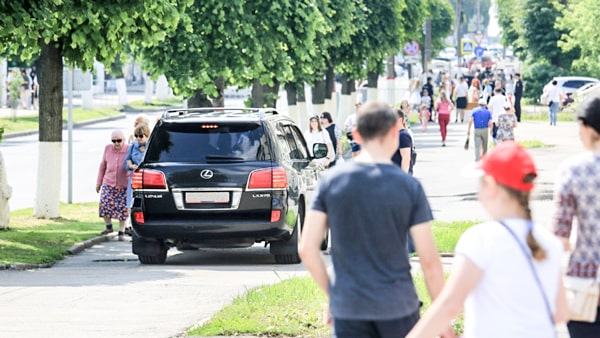
When may a motor vehicle travel across a sidewalk area?

You may drive across a sidewalk to:
  1. A To avoid a speed hump
  2. B At a permanent or duly authorized temporary driveway
  3. C To make a U-turn
  4. D To bypass congested traffic

Correct answer: B – At a permanent or duly authorized temporary driveway

South Carolina prohibits driving a vehicle on a sidewalk or sidewalk area except at a permanent or duly authorized temporary driveway. A driver crossing the sidewalk must continue to exercise due care to avoid pedestrians. Sidewalks may not be used to pass traffic or avoid roadway features.

Source: S.C. Code § 56-5-3835 – Driving upon sidewalk, S.C. Code § 56-5-3230 – Drivers to exercise due care

Question 5

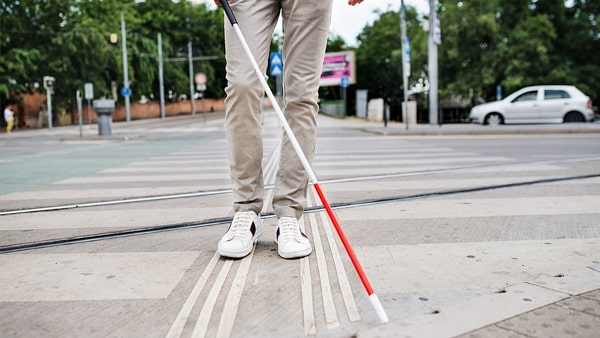
A pedestrian is crossing with a raised white cane or a guide dog. What must an approaching driver do?

When driving near a blind pedestrian who is carrying a white cane or using a guide dog, you should:
  1. A Come to a full stop before reaching the crossing
  2. B Proceed first if no crosswalk is painted
  3. C Continue normally while watching the pedestrian
  4. D Sound the horn and pass quickly

Correct answer: A – Come to a full stop before reaching the crossing

When a pedestrian is crossing or attempting to cross with a guide dog or a raised white cane, an approaching driver must stop before the crossing. The driver may proceed only after taking the precautions necessary to avoid injuring the pedestrian. The official manual likewise directs drivers to stop for visually impaired pedestrians using these aids.

Source: S.C. Code § 56-5-3200 – Vehicle shall stop for pedestrian guided by dog or raising cane, South Carolina Driver’s Manual — § 10, “Pedestrians”

Question 6

Passing is especially unsafe in which of these locations?

  1. A At an intersection
  2. B Before a railroad crossing or bridge
  3. C Where a hill or curve blocks your view
  4. D All of the above

Correct answer: D – All of the above

The driver’s manual warns against passing at intersections, before highway-railroad crossings or bridges, and where a curve or hill blocks the driver’s view. These locations may conceal oncoming traffic or create conflicts with vehicles and other road users. Wait until you have a lawful passing area and a clear view of the roadway.

Source: South Carolina Driver’s Manual — § 7, “Passing”