


South Carolina DMV Sign Test 3

4.8 out of 5 (63 votes)
80% Passing score
20 Questions
4 Mistakes allowed
A South Carolina DMV road signs practice test is worth taking seriously because sign recognition is one of those skills the permit exam expects you to have already internalized. Not sort of recognized. Not vaguely familiar. Actually recognized — by shape, by purpose, and sometimes before the wording is easy to read. This practice test focuses on road sign shapes and meanings, which are part of the real South Carolina beginner’s permit knowledge test. The official Class D knowledge test is based on the South Carolina Driver’s License Manual and covers more than signs, of course: traffic laws, signals, pavement markings, safe driving, sharing the road, alcohol and drug rules, and general driver responsibility all get pulled into the mix. The real exam has 30 multiple-choice questions, and you need 24 correct answers to pass. That is an 80% score, with only 6 questions to spare, so guessing your way through the sign material is not a great little strategy, even if it feels tempting for about three seconds. This SC DMV signs practice test gives you a tighter version of that challenge: 20 questions, with 16 correct answers needed to pass. It is not a separate official South Carolina road-sign-only test — standard beginner’s permit applicants take one overall knowledge test — but it does isolate a topic that can cost you points if you treat it too casually. You’ll see the familiar shapes, yes: the octagon for stop, the triangle for yield, rectangles for regulatory or guide information, warning signs that tell you the road is about to do something inconvenient. And then there are the signs that matter most when conditions are less than ideal. South Carolina driving can be oddly varied for one state. Coastal fog can blur words before it hides the outline of a sign. Rural roads can throw in tight curves, narrow lanes, and warnings that deserve more respect than they usually get. In the Upstate and mountain areas, steep grades and sharp turns are not theoretical manual language; they are things drivers actually meet. First-time applicants take the knowledge test in person at an SCDMV branch, and testing must be done before 4 p.m. A vision screening is also part of the process. Teens may apply for a beginner’s permit at 15 with the proper documents and adult consent if under 18, while adult first-time drivers also begin with a permit if they do not already have driving experience. This practice test will not replace the manual, but it will make the road sign portion feel a lot less like guesswork.
FREE DMV Practice Test App
Study for your South Carolina permit test or driver’s license with the NextDoorDriving app. 700+ DMV questions and answers, 100% free!
Download on the App Store

Sample South Carolina Permit Test Questions

Question 1

A red-and-white WRONG WAY sign warns that:
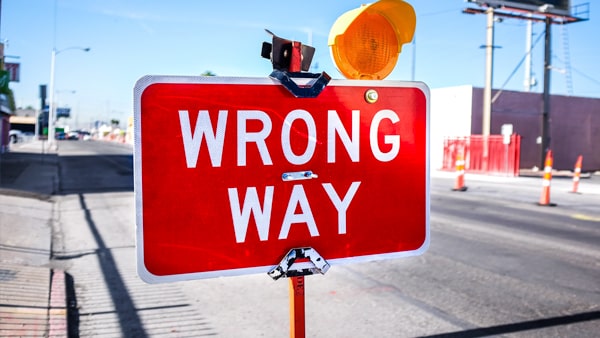
This red and white sign means:
  1. A You may enter after yielding
  2. B The roadway is closed in every direction
  3. C U-turns are prohibited at the next intersection
  4. D You are traveling opposite the permitted direction

Correct answer: D – You are traveling opposite the permitted direction

A WRONG WAY sign indicates that your vehicle is headed against the legally designated flow of traffic. One-way roadways must be used only in the direction shown by official traffic-control devices. Do not continue driving in the prohibited direction.

Source: S.C. Code § 56-5-1910(a), (b) — One-way roadways and rotary traffic islands, South Carolina Driver’s License Manual — § 6, “Regulatory Signs”

Question 2

Under South Carolina law, when may you complete a left turn across oncoming traffic?

  1. A Whenever you face a circular green light
  2. B Before an approaching vehicle reaches the intersection
  3. C After oncoming vehicles no longer present an immediate hazard
  4. D As soon as you enter the center of the intersection

Correct answer: C – After oncoming vehicles no longer present an immediate hazard

A driver turning left must yield to an oncoming vehicle that is within the intersection or close enough to be an immediate hazard. A circular green light permits a left turn unless prohibited, but it does not give the turning driver priority over traffic lawfully using the intersection. Complete the turn only when the required yield has been made.

Source: S.C. Code § 56-5-2320 — Vehicle turning left, S.C. Code § 56-5-970(A)(1) — Traffic-control signal legend

Question 3

In South Carolina, when may a driver turn left at a steady red signal?

  1. A From any street when no vehicle is approaching
  2. B From a two-way street onto a one-way street
  3. C From a one-way street onto a one-way street after stopping and yielding
  4. D Whenever the vehicle ahead completes the turn

Correct answer: C – From a one-way street onto a one-way street after stopping and yielding

Unless a sign prohibits the turn, a driver may turn left at a steady red signal from a one-way street onto another one-way street. The driver must first stop at the required location. The driver must then yield to pedestrians in the adjacent crosswalk and to other traffic lawfully using the intersection.

Source: S.C. Code § 56-5-970(C)(1)–(3) — Traffic-control signal legend

Question 4

A KEEP RIGHT sign placed at the beginning of a roadway divider directs you to:

This white sign means:
  1. A Drive to the right of the divider
  2. B Yield to vehicles turning right
  3. C Move right only if traveling slowly
  4. D Turn right at the next intersection

Correct answer: A – Drive to the right of the divider

The KEEP RIGHT sign directs traffic to pass on the right side of a divider or similar obstruction. On a divided highway, vehicles generally must use the right-hand roadway unless an official traffic-control device or police officer directs otherwise. The sign does not require a right turn at an intersection.

Source: S.C. Code § 56-5-1920 — Driving on divided highways, South Carolina Driver’s License Manual — § 6, “Regulatory Signs”

Question 5

Which listed traffic sign is normally a rectangular regulatory sign?

  1. A School crossing sign
  2. B Railroad crossbuck
  3. C Stop sign
  4. D Speed limit sign

Correct answer: D – Speed limit sign

Regulatory signs are commonly square or rectangular and display rules that drivers must obey. A speed limit sign is a black-and-white regulatory sign showing the maximum legal speed under ideal conditions. A stop sign has eight sides, while school and railroad signs use other distinctive shapes.

Source: South Carolina Driver’s License Manual — § 6, “Regulatory Signs” and “Speed Limit Signs”

Question 6

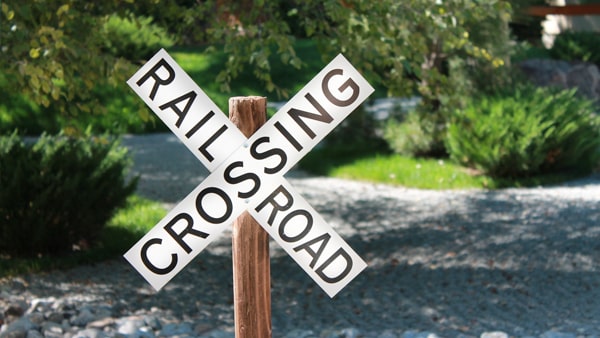
A white X-shaped sign marked RAILROAD CROSSING identifies:

This road sign means:
  1. A An intersection where stopping is always required
  2. B A three-way highway intersection
  3. C A crossroad without traffic controls
  4. D A highway-railroad grade crossing

Correct answer: D – A highway-railroad grade crossing

The crossbuck marks a highway-railroad grade crossing. Watch and listen for trains, and stop behind the stop line or before the crossing when a train or railroad vehicle is approaching. State law requires railroad companies to place standard crossbuck signs at highway-railroad crossings at grade.

Source: S.C. Code § 56-5-1010 — Railroad signs at grade crossings, South Carolina Driver’s License Manual — § 6, “Railroad Crossing Warning Signs”