Virginia DMV Permit Practice Test 6

4.9 out of 5 (310 votes)
80% Passing score
20 Questions
4 Mistakes allowed
This sixth VA permit practice test puts turn signals under the microscope, which is exactly where they belong. A lot of new drivers treat signaling as a small mechanical habit, something you do because the car has a lever and the manual says to use it. In real driving, though, it is one of the main ways you keep other people from having to guess what you are about to do. That includes the driver behind you in traffic, the cyclist moving along your right side, the pedestrian watching your front wheels at an intersection, and the person in the next lane who needs a second or two to react. Virginia driving can make that lesson feel different depending on where you are. Northern Virginia traffic asks for patience and clean lane changes. Rural roads in the Shenandoah Valley leave less room for sloppy assumptions. Tidewater highways bring their own mix of speed, weather, and unfamiliar turns. So, yes, this VA DMV practice test is about test prep, but it is also about building the kind of rule knowledge that holds up outside the testing room, where the road is busier and less polite than the examples in a handbook. The test has 20 questions, and you need 16 correct answers to pass. After each question, you get immediate feedback with an explanation, not just a quick right-or-wrong note that disappears before you learn anything useful. That explanation is where a lot of the value sits, honestly, because the Virginia DMV test may ask about familiar rules in a slightly unfamiliar way. If you understand why an answer works, you are less likely to get thrown off by wording, answer choices, or a situation that looks almost like the one you studied but not quite. For teen drivers, this practice DMV test also sits inside a larger licensing process. Virginia requires many students under 18 to complete a 90-minute parent/student driver education component covering parental responsibilities, juvenile driving restrictions, intoxicated driving, and underage alcohol risks. In Planning District 8, it has to be completed in person with a parent or guardian present. Minors may also have to attend a court licensing ceremony, and the application includes school standing certification plus the 45-hour supervised driving statement. And when the road test comes around, the vehicle matters. It needs proper inspection, registration, plates, brakes, belts, horn, lights, mirrors, speedometer, and working turn signals — fittingly enough. Use this Virginia DMV practice permit test with the manual and driver education, and the rules start to feel less like trivia and more like habits you can actually rely on.

FREE DMV Practice Test App
Study for your Virginia permit test or driver’s license with the NextDoorDriving app. 700+ DMV questions and answers, 100% free!
Download on the App Store

Sample Virginia Permit Test Questions

Question 1

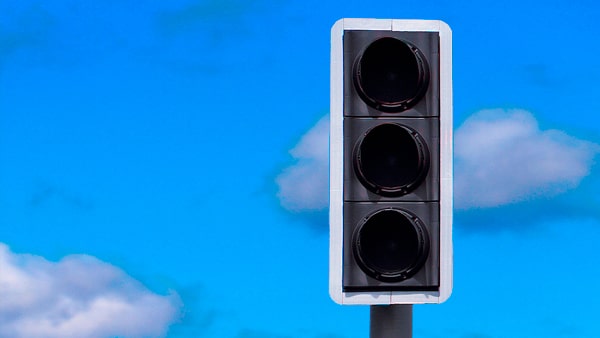
On a standard vertical traffic signal, what is the color order from top to bottom?

From top to bottom, the following is the proper order for traffic lights:
  1. A. Red, yellow, green
  2. B. Red, green, yellow
  3. C. Green, red, yellow
  4. D. Green, yellow, red

Correct answer: A. – Red, yellow, green

A standard vertical signal face places the circular red indication at the top, yellow in the middle, and green at the bottom. Virginia’s traffic-control-device standard incorporates the Virginia MUTCD for signals under state jurisdiction. The standardized arrangement helps drivers identify each indication by both color and position.

Source: 24VAC30-315-10 — General provisions, Virginia Manual on Uniform Traffic Control Devices for Streets and Highways — § 4E.04, “Positions of Signal Indications within a Vertical Signal Face”

Question 2

The liver can process the alcohol in one 12-ounce glass of 5% beer in about:

  1. A. One hour
  2. B. One day
  3. C. Five minutes
  4. D. Five hours

Correct answer: A. – One hour

A 12-ounce glass of 5% beer is considered one standard drink, and the liver can handle about one drink per hour. Alcohol consumed faster than that can build up in the bloodstream. This rate is only an average and does not guarantee sobriety; only time decreases intoxication.

Source: Virginia Commercial Driver’s Manual — § 2.22.1, “Alcohol and Driving”, Virginia Driver’s Manual — § 3, “Drinking and Driving”

Question 3

You are turning left on a steady green light without a green arrow. Oncoming vehicles are close. What should you do?

  1. A. Drive to the next intersection instead
  2. B. Stop on the crosswalk until traffic clears
  3. C. Yield and wait until the turn can be completed safely
  4. D. Turn immediately because the light is green

Correct answer: C. – Yield and wait until the turn can be completed safely

A left turn made without a green arrow is unprotected. Virginia law requires the turning driver to yield to an approaching vehicle that is close enough to constitute a hazard. The driver must also account for pedestrians in the intersection and complete the turn only when the way is clear.

Source: Va. Code § 46.2-825 — Left turn traffic to yield right-of-way, Virginia Driver’s Manual — § 2, “Green Light or Arrow”

Question 4

A two-way road has two solid yellow center lines. Which movement is permitted when it can be made safely?

  1. A. Crossing the lines to turn left into a driveway
  2. B. Using the road as a one-way street
  3. C. Driving along the marked area as a center turn lane
  4. D. Crossing the lines to pass a slow motor vehicle

Correct answer: A. – Crossing the lines to turn left into a driveway

Double solid yellow lines separate opposing traffic, and drivers may not cross them merely to pass another motor vehicle. Virginia law allows a driver to cross the lines when making a left turn, provided the movement is safe. A separate exception permits safely passing pedestrians and certain human-powered devices when specified conditions are met.

Source: Va. Code § 46.2-804(6) — Special regulations applicable on highways laned for traffic; penalty, Virginia Driver’s Manual — § 2, “Pavement Markings”

Question 5

After overtaking another vehicle, which observation indicates that you may have enough clearance to return to the right lane?

After passing a car, it is safe to return to your driving lane when:
  1. A. You have signaled for four seconds
  2. B. The other driver flashes the vehicle’s headlights
  3. C. You can see the front of the passed vehicle in your rearview mirror
  4. D. You can see part of the vehicle in your side mirror

Correct answer: C. – You can see the front of the passed vehicle in your rearview mirror

Virginia law prohibits an overtaking driver from returning to the right until safely clear of the passed vehicle. The driver’s manual gives a practical clearance check: wait until the front of that vehicle is visible in your rearview mirror. A signal or gesture from the other driver does not replace your responsibility to verify clearance.

Source: Va. Code § 46.2-838(A) — Passing when overtaking a vehicle, Virginia Driver’s Manual — § 3, “Passing”

Question 6

When may a driver park on a highway directly in front of a private driveway?

  1. A. Never
  2. B. For no more than 15 minutes
  3. C. When the driver owns the property
  4. D. When the property owner gives permission

Correct answer: A. – Never

Virginia law prohibits parking or allowing a vehicle to stand on a highway in front of a private driveway. The prohibition applies whether the vehicle is attended or unattended. The statute provides no exception based on how long the vehicle remains there, who owns the property, or whether permission was given.

Source: Va. Code § 46.2-1239 — Parking in certain locations; penalty