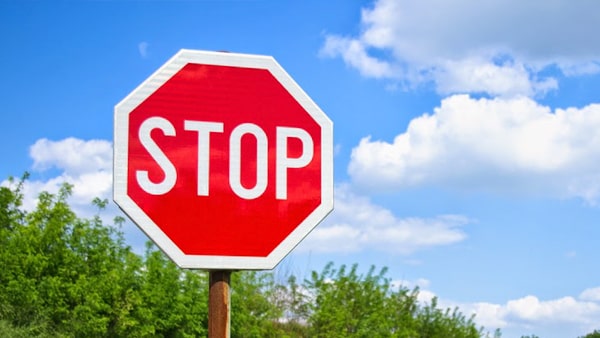
Virginia DMV Sign Test 3

4.9 out of 5 (250 votes)
80% Passing score
20 Questions
4 Mistakes allowed
Virginia road signs deserve their own study time because, on the real knowledge exam, they are not treated like just another batch of permit test questions. They come first. You get 10 road sign questions, and Virginia requires all 10 to be correct before you can move on to the 30-question general knowledge section. That is the detail a lot of new drivers miss, or half-hear, or assume works like the rest of the test. It does not. This VA road signs practice test gives you a focused way to work on that part before you walk into the DMV. It uses a multiple-choice format, which keeps the practice close to the actual Virginia DMV knowledge exam, but it gives you 20 questions instead of only 10. That extra room matters. It lets you see more sign shapes, colors, and meanings—the octagonal stop sign, the triangular yield sign, warning signs, regulatory signs, lane-use signs, school and construction zone signs, and the little variations that are easy to blur together when you are studying too quickly. And, honestly, this is where road sign practice becomes more than memorizing pictures. A sign is usually telling you what kind of decision to make next: stop, slow down, yield, watch for a hazard, stay in a lane, obey a restriction, or prepare for something ahead. Virginia’s full knowledge exam also covers traffic laws, signals, pavement markings, safe driving practices, impaired-driving rules, sharing the road, and driver responsibility, so the signs are tied into the larger driving picture. They are not decorative. They are instructions, warnings, and legal requirements sitting on the side of the road. After you finish the practice test, the end-of-test summary shows the questions you missed and the correct answers, which is where the useful review happens. Not in a sketchy “cheat sheet,” not in a copied answer list, and not in guessing until something sticks. Virginia’s retake rules make preparation worth taking seriously: applicants under 18 must wait 15 full days after failing the knowledge exam, adults may test once per business day, and after three failures, driver education is required before another attempt. A solid DMV signs practice test helps you protect that first attempt—and, more importantly, helps you recognize signs fast enough for real driving, where nobody pauses the road while you think it over.

FREE DMV Practice Test App
Study for your Virginia permit test or driver’s license with the NextDoorDriving app. 700+ DMV questions and answers, 100% free!
Download on the App Store

Sample Virginia Permit Test Questions

Question 1

What does a steady yellow traffic signal warn is about to happen?

  1. A The signal will begin flashing yellow
  2. B The signal will immediately turn green
  3. C The signal indication will change
  4. D The signal will be turned off

Correct answer: C – The signal indication will change

A steady yellow signal is a caution that the traffic indication is about to change. If you have not entered the intersection, stop when it is reasonably safe. If you cannot stop safely, proceed cautiously; traffic already within the intersection should continue until it has cleared.

Source: Va. Code § 46.2-833(A) – Traffic lights; penalty, Virginia Driver’s Manual — Section 2, “Yellow light or arrow”

Question 2

Which centerline prohibits drivers in both directions from crossing left to pass another motor vehicle?

  1. A A solid yellow line beside a broken yellow line
  2. B A single broken yellow line
  3. C Two solid yellow lines
  4. D A single broken white line

Correct answer: C – Two solid yellow lines

Virginia’s two-solid-yellow-lines rule prohibits traffic in either direction from crossing left to pass another motor vehicle. The restriction is not absolute for every maneuver: the lines may be crossed to make a left turn. They may also be crossed to pass a pedestrian or human-powered device when the movement can be completed safely.

Source: Va. Code § 46.2-804(6) – Special regulations applicable on highways laned for traffic; penalty, Virginia Driver’s Manual — Section 2, “Pavement Markings”

Question 3

At the red octagonal sign shown, which action is required?

When you see this sign, you must:
  1. A Come to a complete stop and yield before proceeding
  2. B Reduce speed without stopping
  3. C Stop and wait for a green signal
  4. D Continue if no vehicle is immediately visible

Correct answer: A – Come to a complete stop and yield before proceeding

A STOP sign requires a complete stop, not merely a reduction in speed. Stop at the marked stop line or, if none exists, before the near-side crosswalk or at the legally specified point near the intersecting roadway. Before proceeding, yield to approaching traffic and wait for vehicles or pedestrians to clear the way.

Source: Va. Code § 46.2-821 – Vehicles before entering certain highways shall stop or yield right-of-way, Virginia Driver’s Manual — Section 2, “Octagon (Stop)”

Question 4

When two solid yellow lines mark the roadway center, which maneuver is permitted?

  1. A Crossing the lines to make a lawful left turn into a driveway
  2. B Using the opposing lane as an additional travel lane
  3. C Crossing only when no reason for the maneuver is given
  4. D Passing a slower motor vehicle

Correct answer: A – Crossing the lines to make a lawful left turn into a driveway

Virginia permits a driver to cross two immediately adjacent solid yellow lines when making a left turn, including a lawful turn into a driveway. The lines may not be crossed merely to pass another motor vehicle. State law also allows crossing them to pass a pedestrian or human-powered device when the movement can be made safely.

Source: Va. Code § 46.2-804(6) – Special regulations applicable on highways laned for traffic; penalty, Virginia Driver’s Manual — Section 2, “Pavement Markings”

Question 5

Before entering an intersection on a green light, why should you scan left, right, and left again?

  1. A To confirm that no traffic or other road user is crossing your path
  2. B Because every green light requires a complete stop
  3. C To determine whether cross traffic has a green arrow
  4. D Because all traffic waiting at red has the right-of-way

Correct answer: A – To confirm that no traffic or other road user is crossing your path

The driver’s manual directs motorists to check left, right, and left again before entering an intersection and to look both ways wherever another road user may cross their path. A green signal allows you to proceed only if the way is clear. Scanning helps you identify vehicles, pedestrians, bicyclists, or other hazards before entering.

Source: Virginia Driver’s Manual — Section 2, “Green light or arrow”, Virginia Driver’s Manual — Section 3, “Searching”

Question 6

How should you respond to a flashing yellow traffic signal?

  1. A Maintain speed and disregard cross traffic
  2. B Stop before entering every time
  3. C Slow down and proceed with caution
  4. D Wait until the signal changes to green

Correct answer: C – Slow down and proceed with caution

A flashing circular yellow signal permits traffic to proceed with reasonable care under the circumstances. Slow down, remain alert, and yield to pedestrians or vehicles lawfully within the intersection. Unlike a flashing red signal, a flashing yellow signal does not automatically require a complete stop.

Source: Va. Code § 46.2-833(A) – Traffic lights; penalty, Virginia Driver’s Manual — Section 2, “Flashing yellow light”