Virginia DMV Permit Test Simulator

4.5 out of 5 (1434 votes)
86% Passing score
35 Questions
5 Mistakes allowed
The Virginia DMV permit test rewards people who know the structure before they start studying, because the exam is not one big blended batch of questions. It comes in two parts, and that matters. First are 10 road sign questions, and Virginia expects a perfect score on that section. Miss one sign and the attempt stops there. Only after that do you move into the 30-question general knowledge section, where you need 24 correct answers to pass. This VA DMV permit practice test is built around that reality, not around a loose collection of generic driving questions. It gives you practice with the material Virginia actually expects you to know from the Driver’s Manual: traffic signs, signals, pavement markings, right-of-way, lane use, speed limits, parking rules, safe driving habits, impaired-driving laws, sharing the road, insurance, registration, and driver responsibility. A lot of those topics sound familiar in a broad, “yes, I know what a stop sign is” kind of way. Then the test asks about a specific rule, a specific sign shape, or a specific exception, and suddenly the details matter more than expected. Each session uses a fresh mix of Virginia DMV practice test questions, so you are not training yourself to recognize the same exact order every time. That is important, maybe more important than it sounds, because the real knowledge exam is about recognition and judgment, not memorizing a page of answers. You can work through the questions, review what you missed, and see where the weak spots are — signs, road rules, safety laws, alcohol-related penalties, or one of those small procedural details that tends to get skipped during casual studying. There is also a practical reason to take preparation seriously. Applicants under 18 can apply for a learner’s permit at 15 years and 6 months, but if they fail the knowledge exam, they must wait 15 full days before retesting. Adults 18 and older can usually try again once per business day. After three failures, though, applicants of any age have to complete the required classroom driver education component before a fourth attempt. So, yes, this practice test is about passing the permit exam — but more than that, it is about walking into the Virginia DMV with fewer surprises.
FREE DMV Practice Test App
Study for your Virginia permit test or driver’s license with the NextDoorDriving app. 700+ DMV questions and answers, 100% free!
Download on the App Store

Sample Virginia Permit Test Questions

Question 1

What color lines separate traffic lanes moving in the same direction?

  1. A Yellow
  2. B White
  3. C Red
  4. D Black

Correct answer: B – White

White lines separate lanes carrying traffic in the same direction. Broken white lines permit lane changes when they can be made safely, while solid white lines discourage lane changes in locations where changing lanes may be dangerous. Double solid white lines may not be crossed.

Source: Virginia Driver’s Manual — § 2, “Pavement Markings”
Question 2

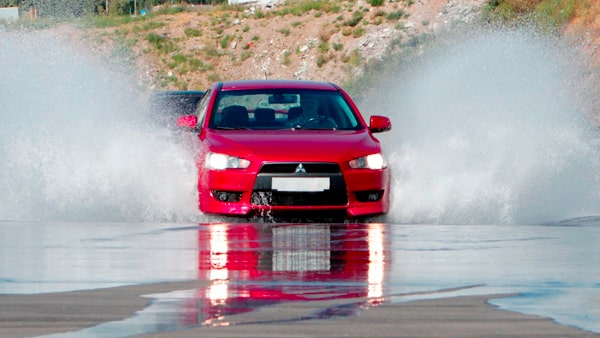
If your vehicle begins to hydroplane, what should you do first?

If the roadway is wet and your car starts to skid, you should:
  1. A Ease off the accelerator and avoid braking
  2. B Shift immediately into a lower gear
  3. C Pump the brakes quickly and firmly
  4. D Shift into neutral and steer sharply

Correct answer: A – Ease off the accelerator and avoid braking

Hydroplaning occurs when the tires lose contact with the road and have little or no traction. Release the accelerator to slow gradually and allow the wheels to regain contact; do not use the brakes to slow while hydroplaning. The regular driver’s manual also advises avoiding ponded water when possible because it can cause hydroplaning or loss of control.

Source: Virginia Commercial Driver’s License Manual — § 2.6.2, “Matching Speed to the Road Surface”, Virginia Driver’s Manual — § 3, “Hazardous Conditions—Rain”

Question 3

What is the best way to pass a large truck traveling in the center lane of a three-lane highway?

  1. A Use the left lane, avoid lingering beside it, and merge only after its entire front is visible in your mirror
  2. B Remain beside the truck in the left lane for as long as possible
  3. C Pass on the right and immediately cut in front of the truck
  4. D Stay beside the truck in the right lane

Correct answer: A – Use the left lane, avoid lingering beside it, and merge only after its entire front is visible in your mirror

Pass in the left lane and do not remain in the truck’s side No-Zone. Before returning to the right, make sure the entire front of the truck is visible in your rearview mirror. Maintain your speed after merging, and never exceed the speed limit while completing the pass.

Source: Virginia Driver’s Manual — § 3, “Passing”, Virginia Driver’s Manual — § 3, “Trucks, Tractor-Trailers, Buses and RVs”

Question 4

A black-and-yellow chevron sign pointing right indicates that:

When you see this sign, it means:
  1. A An object is blocking the roadway
  2. B Traffic will enter from the right
  3. C The roadway changes direction to the right
  4. D A traffic lane merges ahead

Correct answer: C – The roadway changes direction to the right

A chevron alignment sign emphasizes a change in the roadway’s horizontal direction. The chevron points in the direction drivers must follow, and a series of signs may outline the curve. Under the Virginia MUTCD, this sign is used to provide added guidance through a change in alignment rather than to mark a merge or side road.

Source: 24VAC30-315-10 — General Provisions, Virginia MUTCD — § 2C.08, “Chevron Alignment Sign (W1-8)”

Question 5

A truck moves left before beginning a right turn. Which action is especially dangerous?

  1. A Driving between the truck and the curb
  2. B Remaining behind the truck while it turns
  3. C Allowing the truck additional turning space
  4. D Watching the truck's turn signals

Correct answer: A – Driving between the truck and the curb

Trucks, buses, and recreational vehicles may swing left before turning right because they need more turning space. Their drivers also have large blind spots beside and behind their vehicles. Do not enter the narrowing space between a turning truck and the curb; remain back and allow the vehicle to finish its turn.

Source: Virginia Driver’s Manual — Section 3, “Sharing the Road—Trucks, Tractor-Trailers, Buses and RVs”

Question 6

If your vehicle is equipped with air bags, when should you wear your safety belt?

  1. A Only when traveling on an expressway
  2. B On every trip
  3. C Only when driving outside a city
  4. D Only at speeds above 35 mph

Correct answer: B – On every trip

Air bags are designed to work with safety belts during a front-end crash. The belt helps restrain your body while the air bag cushions forward movement. Always buckle up and require passengers to do the same, regardless of the road, speed, or length of the trip.

Source: Virginia Driver’s Manual — Section 4, “Air Bags”