Wisconsin Permit Test Simulator

4.5 out of 5 (769 votes)
80% Passing score
50 Questions
10 Mistakes allowed
Wisconsin’s Class D knowledge test is straightforward on paper, but it is still a real exam with real rules behind it. You get 50 multiple-choice questions, and you need 40 correct answers to pass. That 80% mark sounds manageable, sure, but the test pulls from a wider pool than basic stop signs and “don’t speed” reminders. It covers Wisconsin traffic laws, road signs, pavement markings, right-of-way rules, safe driving practices, OWI laws, sharing the road, and the kinds of everyday driving judgment that are easy to gloss over when you are just flipping through the handbook too quickly. This Wisconsin DMV practice test is built around that same structure, so each round gives you 50 questions and a realistic passing target. The point is not to memorize one neat little answer pattern and then hope the real temps test cooperates. It probably will not. The better approach is repetition with variety, which is why getting a fresh set of questions each time matters more than people think. The Wisconsin details are kept where they should be: inside the actual practice. You will work through signs, signals, lane markings, safe following distance, turns, weather-related driving, impaired driving rules, and those state-specific bits that do not always feel important until they show up in a question. Visual aids are included too, because sometimes a sign shape or traffic setup makes more sense when you can actually see it instead of dragging yourself through another over-explained paragraph. Helpful, yes. Slightly overdue in test prep, also yes. For teen drivers, the temps process starts at age 15, with driver education, school eligibility, an adult sponsor, and Wisconsin’s Graduated Driver License rules waiting in the background. Adults have a shorter licensing path in some ways, since driver education and the 50 supervised hours are not required after 18, but the knowledge test, signs test, vision screening, instruction permit, and road test still matter. DMV knowledge and signs tests at Wisconsin service centers are free. Eligible drivers ages 15 to 17 can also use the online Class D test, though that comes with webcam requirements, parent or guardian monitoring, and a $10 fee per attempt. This practice test stays free, repeatable, and focused on the material that actually decides whether you are ready to pass.

FREE DMV Practice Test App
Study for your Wisconsin permit test or driver’s license with the NextDoorDriving app. 700+ DMV questions and answers, 100% free!
Download on the App Store

Sample Wisconsin Permit Test Questions

Question 1

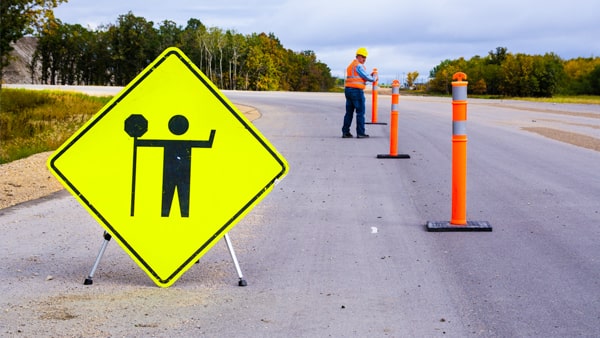
An orange diamond sign showing a person holding a flag warns of:

This sign means:
  1. A A pedestrian crossing
  2. B The end of road work
  3. C A school crossing
  4. D A flagger directing traffic ahead

Correct answer: D – A flagger directing traffic ahead

This is the Road Construction Flagger Ahead sign. It warns that a worker may be controlling traffic with a sign or flag in the work area. Wisconsin drivers must slow as conditions require and follow the flagger’s directions.

Source: Wisconsin Motorists’ Handbook — Section 4, “C. Construction”

Question 2

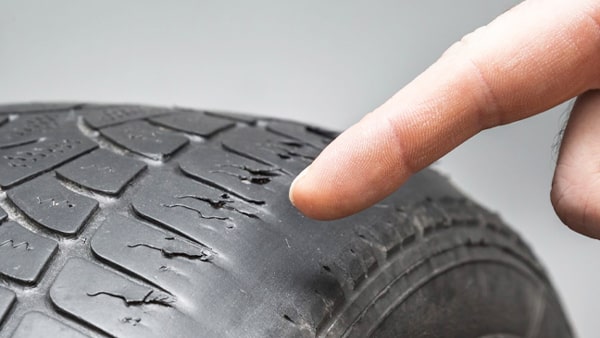
Compared with tires in good condition, worn or bald tires can:

Worn or bald tires:
  1. A Reduce traction
  2. B Increase stopping distance
  3. C Hydroplane at lower speeds
  4. D Do all of these

Correct answer: D – Do all of these

Worn tread reduces traction and increases the distance needed to stop. Bald tires can also hydroplane at relatively low speeds because they cannot move water away effectively. Wisconsin equipment rules require at least 2/32 inch of tread in every major tire groove, measured at two points at least 15 inches apart.

Source: Wis. Admin. Code Trans § 305.30 – Tires and rims, Wisconsin Motorists’ Handbook — Section 7, “Hydroplaning”

Question 3

Before pulling away from a curb into moving traffic, you need:

  1. A Two hundred feet to remain below traffic speed
  2. B A safe gap that lets you join traffic without disrupting its movement
  3. C Only enough room for the nearest vehicle to pass
  4. D A signal from another driver allowing you to enter

Correct answer: B – A safe gap that lets you join traffic without disrupting its movement

Signal, check your surroundings and wait for a safe gap before leaving the curb. When entering traffic, try to reach the speed at which traffic is moving without forcing another driver to change speed or direction. The driver entering the roadway is responsible for making the movement safely.

Source: Wisconsin Motorists’ Handbook — Section 3, “B. Understanding Vehicle Speed”

Question 4

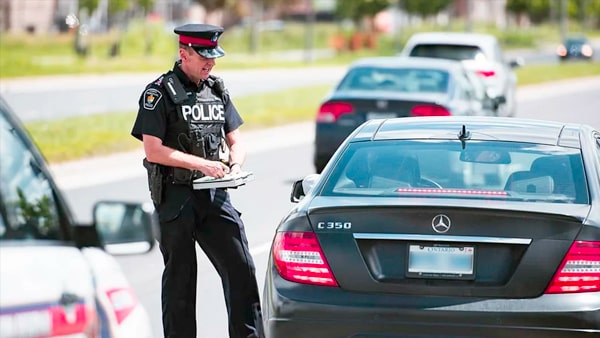
After a qualifying Wisconsin OWI arrest, you refuse the requested chemical test. What is the penalty for a first refusal?

A police officer stops you because he suspects you are DUI. You refuse to take a chemical test. What happens now?
  1. A Revocation of your operating privilege for one year
  2. B Only an additional monetary fine
  3. C Automatic denial of bail
  4. D Automatic permanent impoundment of your vehicle

Correct answer: A – Revocation of your operating privilege for one year

Wisconsin’s implied-consent law authorizes evidentiary testing of breath, blood or urine after a qualifying arrest. Refusing the requested test results in a notice of intent to revoke the driver’s operating privilege. A first refusal carries a one-year revocation and may have additional licensing consequences.

Source: Wis. Stat. § 343.305(9), (10)(b) – Tests for intoxication; administrative suspension and court-ordered revocation, Wisconsin Motorists’ Handbook — Section 9, “A. Alcohol, Drugs and Driving”

Question 5

Before opening the traffic-side door of a vehicle parked at a curb, you should:

  1. A Confirm that the vehicle is two feet from the curb
  2. B Turn the front wheels toward the curb
  3. C Check for approaching vehicles and bicycles
  4. D Turn the front wheels away from the curb

Correct answer: C – Check for approaching vehicles and bicycles

Wisconsin law requires due precaution before anyone opens a vehicle door on a highway. The door must not interfere with traffic or endanger another person or vehicle. Checking the traffic side for motorists, motorcyclists and bicyclists helps you verify that the door can be opened safely.

Source: Wis. Stat. § 346.94(20)(a) – Miscellaneous prohibited or restricted acts

Question 6

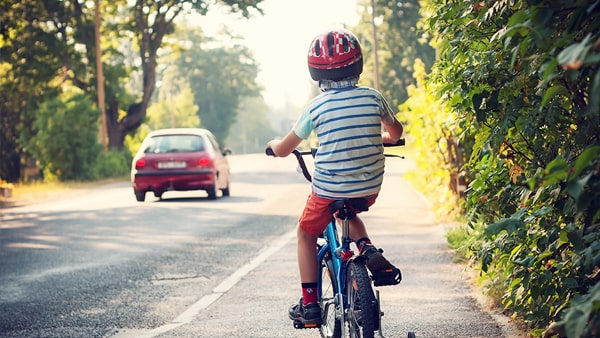
When children are playing near a roadway, which possibility should you be prepared for?

When you drive through an area where children are playing, you should expect them:
  1. A They will accurately judge when it is safe to cross
  2. B They will always stop at the curb
  3. C They may enter the roadway without looking
  4. D They will cross only when accompanied by an adult

Correct answer: C – They may enter the roadway without looking

Children or other pedestrians may run into the road without first checking for vehicles. Stay alert, reduce speed when necessary and maintain enough space to respond. Do not depend on a child to stop at the curb or correctly judge your vehicle’s speed and distance.

Source: Wisconsin Motorists’ Handbook — Section 10, “A. Pedestrians”, Wisconsin Motorists’ Handbook — Section 3, “B. Understanding Vehicle Speed”