Minnesota Practice Permit Test 4

4.8 out of 5 (573 votes)
80% Passing score
20 Questions
4 Mistakes allowed
Minnesota’s permit test is the first official checkpoint where all that driver’s manual studying has to become actual answers on a screen. This MN permit test practice gives you 20 multiple-choice questions built around Minnesota road rules, signs, traffic situations, and safety details, including child passenger safety, which sounds simple until the test starts asking about it in that very particular licensing-exam way. The point is not to memorize a few scraps from a so-called DMV test cheat sheet and hope they happen to match. That is a shaky plan, and, honestly, not a great one. A better approach is to get used to how the Minnesota DMV practice test asks questions: sometimes plainly, sometimes with a visual aid, sometimes with just enough wording to make you slow down and think. The images included with many questions help with road signs and driving scenarios, especially when the rule makes more sense once you can actually see the situation. Minneapolis traffic, a rural two-lane road outside Mankato, a wet stretch near Duluth — different scenery, same rules underneath it all. For teen drivers, the permit test fits into Minnesota’s Graduated Driver Licensing process. The minimum age for a Class D instruction permit is 15, but applicants under 18 generally need driver education first: 30 hours of classroom instruction and enrollment in behind-the-wheel training, or enough progress in an approved concurrent course. After that come the knowledge test, vision screening, documents, adult approval, and the fee. Once issued, the instruction permit is valid for two years, and permit driving must happen with a licensed adult beside the driver. Teens under 18 also cannot use a cell phone while driving, even hands-free, which is one of those details worth knowing before it becomes a real-life mistake. The teen path keeps going after the permit. A provisional license can start at age 16, but only after the teen has held the permit for at least six months, completed driver education, logged supervised driving practice, included nighttime hours, and passed the road test. Passenger limits and nighttime restrictions apply early in the provisional stage, so the license is freedom, yes, but with strings attached. Adults get a more direct route, though not a magic shortcut. First-time adult applicants still need the Class D knowledge test, vision screening, an instruction permit, supervised practice, and the road test. At 18, the permit must be held for at least six months; at 19 or older, the usual wait is at least three months. This Minnesota practice permit test helps you prepare for that first written step with fewer surprises and a much better grip on what comes next.

FREE DMV Practice Test App
Study for your Minnesota permit test or driver’s license with the NextDoorDriving app. 700+ DMV questions and answers, 100% free!
Download on the App Store

Sample Minnesota Permit Test Questions

Question 1

How far before an intersection must you begin signaling for a right turn?

  1. A. At least 25 feet
  2. B. Only after reaching the intersection
  3. C. At least 100 feet
  4. D. Only when another vehicle is behind you

Correct answer: C. – At least 100 feet

Minnesota law requires a turn signal to be given continuously during at least the final 100 feet before a right or left turn. Begin early enough to provide the full required distance and keep signaling through the turn. The 100-foot rule applies regardless of whether another vehicle is visible behind you.

Source: Minn. Stat. § 169.19, subd. 5 — Turning, Starting, and Signaling, Minnesota Driver’s Manual — Ch. 3, “Signaling”

Question 2

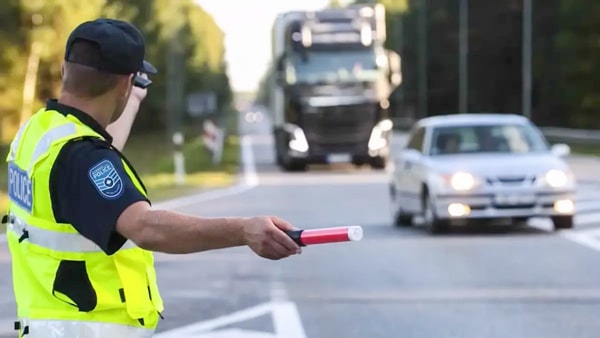
A traffic signal is red, but a police officer directs you through the intersection. What should you do?

A traffic light is red, but a police officer is telling you to go ahead anyway. What should you do?
  1. A. Remain stopped until the light turns green
  2. B. Change lanes before proceeding
  3. C. Follow the officer’s direction
  4. D. Wait for the officer to approach your vehicle

Correct answer: C. – Follow the officer’s direction

Drivers must follow a police officer’s lawful traffic direction even when it differs from a traffic signal. Minnesota law requires obedience to official traffic-control devices unless a police officer or authorized flagger directs otherwise. In this situation, the officer’s direction controls rather than the red light.

Source: Minn. Stat. § 169.06, subd. 4(a) — Signs, Signals, Markings

Question 3

A steady yellow light appears as you approach an intersection. When may you continue through?

  1. A. Whenever no pedestrians are visible
  2. B. Only when making a right turn
  3. C. Whenever traffic behind you is close
  4. D. When you cannot stop safely before entering

Correct answer: D. – When you cannot stop safely before entering

A steady yellow warns that the green movement is ending and a red signal will follow. If you can stop safely before entering the intersection, do not enter. If you cannot stop safely, the driver’s manual directs you to continue through cautiously; a driver already waiting in the intersection to turn should complete the turn when safe.

Source: Minn. Stat. § 169.06, subd. 5(a)(2)(i) — Signs, Signals, Markings, Minnesota Driver’s Manual — Ch. 5, “Traffic-control signals”

Question 4

Which is not an effect of drinking alcohol?

  1. A. Slower reaction time
  2. B. Impaired judgment and perception
  3. C. Reduced attention to driving tasks
  4. D. Improved focus and concentration

Correct answer: D. – Improved focus and concentration

Alcohol is a depressant that slows body functions and impairs driving skills. It can slow reaction time, reduce attention, distort perception and weaken judgment about speed or stopping distance. It does not improve concentration; drivers may instead misjudge their own impairment and make unsafe decisions.

Source: Minnesota Driver’s Manual — Ch. 8, “Effect of alcohol on driving skills”

Question 5

Which practice is safest before and during backing?

Backing up your vehicle is:
  1. A. Rely only on the mirrors and backup camera
  2. B. Check around the vehicle and keep looking through the rear window
  3. C. Back quickly to spend less time in reverse
  4. D. Watch only the front corners of the vehicle

Correct answer: B. – Check around the vehicle and keep looking through the rear window

Backing limits what you can see around the vehicle, so check the area before moving. The manual directs drivers to walk around the vehicle, look to the front, sides and rear, and continue looking out the rear window while backing. Mirrors and backup cameras are aids, but they should not be your only method of observation.

Source: Minnesota Driver’s Manual — Ch. 3, “Backing up”

Question 6

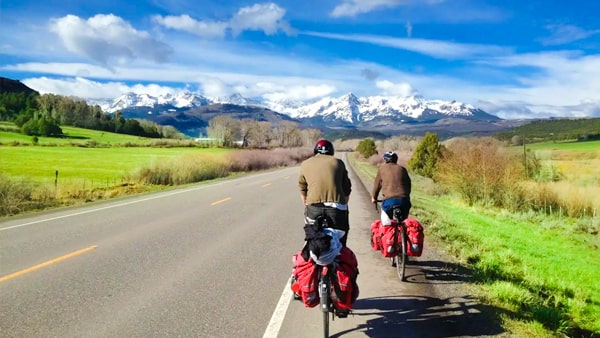
What minimum clearance must you provide when passing a bicyclist?

When passing a bicyclist, you should:
  1. A. One foot
  2. B. At least three feet
  3. C. No set distance when remaining in your lane
  4. D. No set distance after sounding the horn

Correct answer: B. – At least three feet

An overtaking driver must leave a safe distance from a bicyclist and at least three feet of clearance. Minnesota law also requires maintaining that clearance until the vehicle is safely past. Wait to pass until the required space can be provided safely without creating a conflict with oncoming traffic.

Source: Minn. Stat. § 169.18, subd. 3(3) — Driving Rules, Minnesota Driver’s Manual — Ch. 4, “Passing a bicyclist”