


New Jersey DMV Permit Test Simulator

4.5 out of 5 (2295 votes)
80% Passing score
50 Questions
10 Mistakes allowed
Before New Jersey lets a first-time driver move on to the road test, the MVC wants to see that the basics are actually there. That starts with the knowledge test: a 50-question exam based on the New Jersey Driver Manual, covering traffic laws, safe driving rules, road signs and signals, GDL restrictions, DUI laws, vehicle operation, and the ordinary driver responsibilities that are easy to skim past when you are just trying to get the permit done. This New Jersey DMV practice test is built around that written exam, not the entire licensing process. The paperwork, vision screening, 6 Points of ID, supervised driving period, and road test all matter later—or, fine, some of them matter sooner than anyone would prefer—but the practice test itself stays focused on the MVC knowledge test. That distinction is worth making, because studying for the written test is its own thing. You need to recognize signs, understand right-of-way, know when to stop, remember how New Jersey handles school buses and emergency vehicles, and have a working grip on alcohol laws and GDL rules. Our NJ permit test online follows the official test structure: 50 questions, with 40 correct answers required to pass. That is an 80% passing score, and it leaves room for only 10 missed questions. Each practice session pulls a fresh set of randomly selected questions, so you are not simply memorizing the same sequence and mistaking that for readiness. The questions are designed to feel like the real NJ MVC permit test in both subject matter and pace, which is helpful because 50 questions can start to feel surprisingly long once the topics begin overlapping. Road signs are included where they belong: inside the knowledge test practice, not treated as some detached extra. Some questions use images because visual recognition matters, especially with signs, signals, and traffic situations. The goal is to make the material stick in the way it needs to stick when you are sitting for the actual test. Use this New Jersey permit practice test to tighten up the sections that carry the most weight in the Driver Manual: signs and signals, rules of the road, driver safety, GDL restrictions, and the smaller details that people tend to read once, nod at, and then miss under pressure. It is not the whole licensing journey. It is the part that helps you walk into the knowledge test knowing where you stand.
FREE DMV Practice Test App
Study for your New Jersey permit test or driver’s license with the NextDoorDriving app. 700+ DMV questions and answers, 100% free!
Download on the App Store

Sample New Jersey Permit Test Questions

Question 1

Why should you maintain open space around your vehicle?
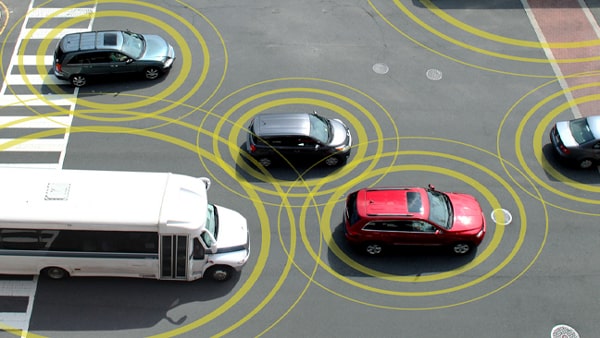
What is the benefit of a "space cushion" around your vehicle?
  1. A It prevents every other driver from changing lanes
  2. B It is needed only on rural highways
  3. C It provides time and room to react to emergencies
  4. D It eliminates the need to check mirrors

Correct answer: C – It provides time and room to react to emergencies

Adequate space around the vehicle provides time to recognize an emergency and room to stop or maneuver. Drivers should maintain a safe following distance and avoid traveling unnecessarily beside other vehicles. Space management is especially important when traffic, weather, or roadway conditions increase stopping distance or reduce available escape routes.

Source: New Jersey Driver Manual — Ch. 5, “Keep a Safe Distance/Do Not Tailgate”
Question 2

When entering a New Jersey highway and no safe opening is immediately available, what is your responsibility?

  1. A Force the vehicle into the smallest available gap
  2. B Reverse along the entrance ramp
  3. C Use the shoulder as an acceleration lane
  4. D Yield to highway traffic and enter only when a safe opening is available

Correct answer: D – Yield to highway traffic and enter only when a safe opening is available

Use the acceleration lane to approach the speed of highway traffic, signal, and search for an opening. The manual instructs drivers to avoid stopping in the acceleration lane, but they must yield to traffic already on the highway and enter the right lane only when safe. Never force a merge, reverse on the ramp, or use the shoulder to pass traffic.

Source: New Jersey Driver Manual — Ch. 4, “Entering Highways, Parkways, and Turnpikes”

Question 3

Under New Jersey law, when may you pass a vehicle on its right on a two-way roadway?

  1. A When it is preparing to turn right
  2. B When it is making or preparing to make a left turn and the pass can be made safely
  3. C Whenever it slows near the curb
  4. D When it is entering a driveway on the right

Correct answer: B – When it is making or preparing to make a left turn and the pass can be made safely

A driver may pass on the right when the vehicle ahead is making or about to make a left turn. The movement is permitted only under conditions that allow it to be completed safely. The passing driver may not leave the pavement or main-traveled portion of the roadway to perform the maneuver.

Source: N.J.S.A. 39:4-85 – Passing to left when overtaking; passing when in lines; passing on right

Question 4

What is the only effective way for your body to become sober after drinking alcohol?

  1. A Drink strong coffee
  2. B Exercise vigorously
  3. C Allow sufficient time for the body to eliminate the alcohol
  4. D Take a cold shower

Correct answer: C – Allow sufficient time for the body to eliminate the alcohol

Only time allows the body to process and eliminate alcohol. Coffee, exercise, cold showers, and fresh air may change how awake a person feels, but they do not make the person sober or reliably lower BAC. Alcohol is removed slowly, making supposed quick-sobering methods ineffective.

Source: New Jersey Driver Manual — Ch. 6, “Effects of Alcohol”

Question 5

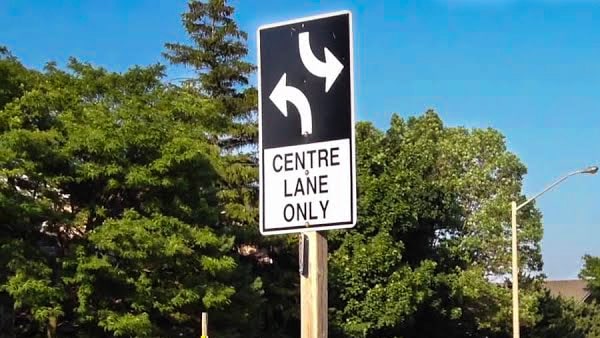
What is the intended use of a two-way center left-turn lane?

From the center lane, what maneuvers can you perform?
  1. A Preparing for and making a left turn
  2. B Traveling continuously with through traffic
  3. C Passing slower vehicles
  4. D Parking temporarily

Correct answer: A – Preparing for and making a left turn

A two-way center left-turn lane provides a shared area where drivers traveling in either direction can prepare for a left turn. It is not a regular travel or passing lane. Enter it carefully because vehicles approaching from the opposite direction may also use it to turn left.

Source: New Jersey Driver Manual (2025) — Ch. 4, “Traffic Signs, Signals, and Road Markings”

Question 6

On a New Jersey roadway with two lanes in your direction, where should you begin a right turn?

  1. A From the lane nearest the centerline
  2. B From the lane closest to the right curb or roadway edge
  3. C From either lane when no traffic is approaching
  4. D From whichever lane is moving faster

Correct answer: B – From the lane closest to the right curb or roadway edge

N.J.S.A. 39:4-123(a) requires both the approach and the right turn to be made as close as practicable to the right-hand curb or roadway edge. Starting from the proper lane helps prevent a wide turn across another lane. Follow any signs or markings that establish a different turning pattern.

Source: N.J.S.A. 39:4-123(a) — Right and left hand turns