Pennsylvania Drivers Ed Practice Test 8

5 out of 5 (87 votes)
80% Passing score
20 Questions
4 Mistakes allowed
Pennsylvania intersection questions deserve real attention, mostly because they are where the permit test stops feeling like pure memorization and starts asking whether you actually understand how traffic is supposed to move. This PA drivers ed practice test leans into that. The 20 multiple-choice questions focus on right-of-way rules, four-way stops, flashing yellow lights, multi-lane intersections, roundabouts, bike lanes, and the small judgment calls that drivers make every day without narrating them out loud. It is not just a quick warm-up, although it works fine for that too. This PA practice permit test is built to make the official rules feel more usable. You will see questions that connect the wording of the Pennsylvania Driver’s Manual to ordinary driving situations — the kind where one car hesitates, another driver waves too vaguely, and suddenly the “simple” rule needs to be clear in your head. A little messy, yes, but that is traffic. For the actual Pennsylvania learner’s permit knowledge test, PennDOT uses material from the official Pennsylvania Driver’s Manual. The real knowledge test has 18 multiple-choice questions. You need 15 correct answers to pass, so you can miss no more than 3. That passing score is about 83%, which is a useful number to keep in mind because it leaves less room for casual guessing than some applicants expect. If you do not pass, PennDOT allows another attempt on the following business day, but still — better to walk in prepared once. The licensing path depends a bit on who is applying. First-time Pennsylvania drivers need a learner’s permit before they can legally operate a motor vehicle, and the permit process includes the vision screening and knowledge test before the road test comes into the picture. Applicants under 18 take the same 18-question exam, with the added requirement of proper consent from a parent, guardian, person in loco parentis, or qualifying spouse. Adults 18 and older also take that same knowledge test, and they must bring two proofs of Pennsylvania residency when applying. Out-of-state drivers should pay attention here as well: if an out-of-state license has been expired for more than 6 months, Pennsylvania generally requires the person to apply for a learner’s permit and complete the applicable testing. Use this free PA practice drivers ed permit test as a focused study tool, especially if intersections are the part you do not want to be figuring out for the first time at the testing center.
FREE DMV Practice Test App
Study for your Pennsylvania permit test or driver’s license with the NextDoorDriving app. 700+ DMV questions and answers, 100% free!
Download on the App Store

Sample Pennsylvania Permit Test Questions

Question 1

A red circular sign containing a horizontal white bar means:
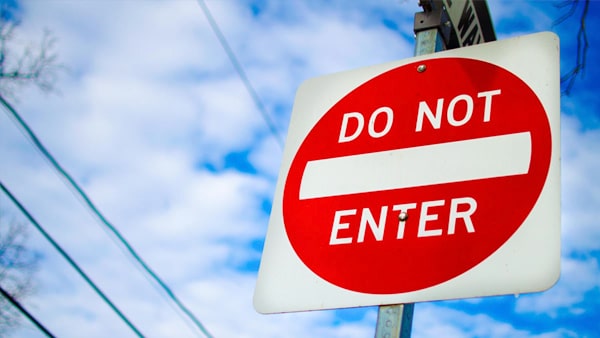
This sign means:
  1. A Stop completely
  2. B U-turns are prohibited
  3. C Yield to approaching traffic
  4. D Do not enter from this direction

Correct answer: D – Do not enter from this direction

The red circle with a horizontal white bar is the DO NOT ENTER sign. It is placed at the beginning of one-way streets and ramps where vehicles may not enter from the direction they are traveling. A WRONG WAY sign may be posted farther along the same roadway.

Source: Pennsylvania Driver’s Manual — Ch. 2, “Regulatory Signs”
Question 2

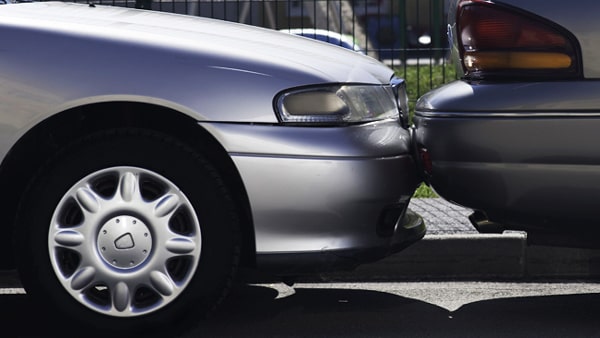
In Pennsylvania, what must you do after damaging an unattended parked vehicle if you cannot locate its owner?

If you hit a parked car and cannot find the owner, you:
  1. A Report the collision only if the damage appears serious
  2. B Wait at the scene until the owner returns
  3. C Securely attach a notice with the required information and promptly notify the nearest police department
  4. D Leave the scene after recording the other vehicle’s license plate

Correct answer: C – Securely attach a notice with the required information and promptly notify the nearest police department

You must stop and either locate the owner or securely attach a conspicuous written notice to the damaged property. The notice must include your name, address, financial-responsibility information, and vehicle registration number. You must also notify the nearest authorized police department without unnecessary delay.

Source: 75 Pa.C.S. § 3745(a) – Accidents involving damage to unattended vehicle or property

Question 3

Which actions are appropriate ways to communicate with other road users?

  1. A Use turn signals before changing direction
  2. B Sound the horn when another road user may not see you or a collision is threatened
  3. C Use hazard flashers to warn others when your vehicle is disabled
  4. D All of these

Correct answer: D – All of these

Turn signals communicate planned changes in direction, while brake lights and advance warning help others recognize slowing or stopping. The horn may attract attention when another road user does not see you or a collision is possible. Hazard flashers warn traffic when a disabled vehicle has been moved off the roadway.

Source: Pennsylvania Driver’s Manual — Ch. 3, “Communicating Your Intentions to Other Drivers”

Question 4

How should you direct your vision while driving?

  1. A Keep your eyes fixed on the center of your lane
  2. B Watch only the vehicle directly ahead
  3. C Look far ahead without checking the sides or mirrors
  4. D Continuously scan near and far, including the sides and traffic behind

Correct answer: D – Continuously scan near and far, including the sides and traffic behind

Safe observation requires scanning the entire driving scene rather than staring at one point. Look far enough ahead to identify developing problems while continuing to check the sides, mirrors, and blind spots. This provides information about hazards both ahead of and around your vehicle.

Source: Pennsylvania Driver’s Manual — Ch. 3, “Looking Ahead,” “Looking to the Sides,” and “Looking Behind”

Question 5

Under normal conditions, how much following time should you leave behind a motorcycle?

When traveling behind a motorcycle:
  1. A At least two vehicle lengths
  2. B At least two seconds
  3. C At least four seconds
  4. D At least four motorcycle lengths

Correct answer: C – At least four seconds

Leave a following interval of at least four seconds behind a motorcycle or moped. This provides time to respond if the rider changes speed or position to avoid a roadway hazard. Increase the interval when road or weather conditions are poor.

Source: Pennsylvania Driver’s Manual — Ch. 3, “Motorcyclists and Moped Drivers”

Question 6

Why must Pennsylvania drivers watch for bicyclists using ordinary traffic lanes?

  1. A Bicyclists are required to ride against traffic
  2. B Bicyclists on a roadway generally have the rights and duties applicable to vehicle drivers
  3. C Bicyclists always have the right-of-way

Correct answer: B – Bicyclists on a roadway generally have the rights and duties applicable to vehicle drivers

A person riding a pedalcycle on a roadway generally receives the same rights and has the same duties as a vehicle driver, subject to bicycle-specific exceptions. Drivers should expect bicyclists to lawfully use traffic lanes. This rule does not give a bicyclist an automatic right-of-way in every situation.

Source: 75 Pa.C.S. § 3501(a) – Applicability of traffic laws to pedalcycles