Washington DMV Practice Test 2

4.7 out of 5 (3245 votes)
80% Passing score
20 Questions
4 Mistakes allowed
This WA DMV practice test gives you a straightforward way to review the Washington driving rules that are most likely to matter on the official knowledge test. It is built around 20 questions covering the usual essentials: seat belt requirements, pedestrian right-of-way, traffic signs, safe driving decisions, and Washington’s restrictions on handheld phone use while driving. Nothing here is dressed up more than it needs to be. The point is to help you recognize the rule, understand the wording, and avoid getting tripped up by an answer choice that looks close enough until it is not. Washington’s official knowledge test is a written multiple-choice exam, and it is given through approved testing locations, including driver training schools. Once you pass, your knowledge-test score is valid for 2 years, so there is a little breathing room after that. But the cleaner move is still to prepare before you go in, rather than treating the first attempt like a warm-up round. This Washington DOL practice permit test also sits inside a bigger licensing process. Applicants for a driver license or instruction permit need to pass a vision screening. Washington generally uses 20/40 Snellen vision with both eyes combined as the standard screening threshold, with or without correction. If you need glasses or contacts to meet the standard, a corrective-lenses restriction may be added. If your vision falls outside the expected range, DOL may require an eye specialist’s report. Not the most exciting paragraph in the world, admittedly, but it matters. The document side matters too. Washington requires acceptable proof of identity, a Social Security number if you have one, and original documents instead of copied, scanned, or photographed versions. Teen applicants have extra requirements, including parent or guardian authorization and driver training records that must be submitted properly. There is some flexibility built into the process. The Washington knowledge test is available in multiple languages, and accommodations may be available for applicants who need a quieter testing environment, assistive audio devices, alternate-format materials, interpreter services, or related support arranged ahead of time. Use this Washington DMV practice test as a real rehearsal. Take the questions seriously, check the ones you miss, and review the Washington Driver Guide until the rules feel familiar enough to hold up under test wording.
FREE DMV Practice Test App
Study for your Washington permit test or driver’s license with the NextDoorDriving app. 700+ DMV questions and answers, 100% free!
Download on the App Store

Sample Washington Permit Test Questions

Question 1

A yellow diamond sign displaying a black cross warns of:
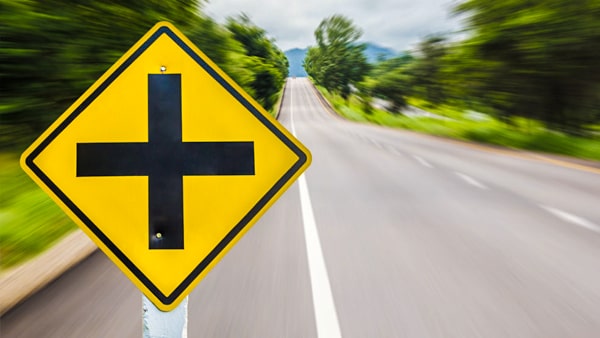
This sign means:
  1. A. A place of worship
  2. B. An emergency medical station
  3. C. A four-way intersection ahead
  4. D. A railroad crossing

Correct answer: C. – A four-way intersection ahead

This is the cross-road warning sign. It indicates that another road crosses the roadway ahead, creating a four-way intersection. Watch both sides for approaching traffic and be prepared to respond to any signs or signals at the intersection.

Source: Washington State Driver Guide — §§ 4.12–4.13, “Other Traffic Signs”; “Cross Intersection”
Question 2

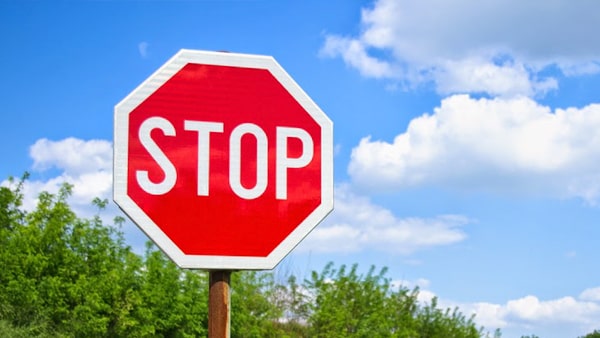
At a red octagonal STOP sign, what must you do?

When you see this sign, you must:
  1. A. Come to a complete stop, yield as required, and proceed when safe
  2. B. Slow down and continue if no vehicles are visible
  3. C. Wait for a traffic light to turn green
  4. D. Stop only when another vehicle is approaching

Correct answer: A. – Come to a complete stop, yield as required, and proceed when safe

Washington law requires a stop at the marked stop line or, if none exists, before the crosswalk or nearest point with a view of intersecting traffic. After stopping, yield to vehicles that present an immediate hazard. The Driver Guide also directs you to look for crossing vehicles and pedestrians before proceeding.

Source: RCW 46.61.190(2)(a) – Vehicle entering stop or yield intersection—Vulnerable users of a public way—Fine, Washington State Driver Guide — § 4.12, “Stop”

Question 3

On a road with one lane in your direction, passing on the right may be allowed when the vehicle ahead is:

  1. A. Turning right
  2. B. Making or preparing to make a left turn
  3. C. Stopping beside the right curb
  4. D. Entering a driveway on the right

Correct answer: B. – Making or preparing to make a left turn

In Washington, a driver may pass on the right when the vehicle being overtaken is making or preparing to make a left turn. The movement must be possible safely and without driving off the roadway. Passing on the shoulder is not authorized by this rule.

Source: RCW 46.61.115(1)(a), (2) – When overtaking on the right is permitted

Question 4

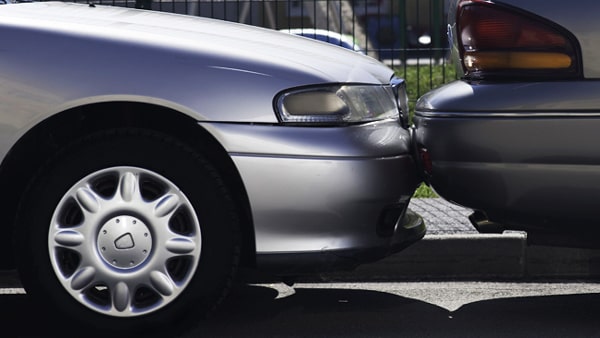
You strike an unattended parked vehicle and cannot locate its owner. What must you do?

If you hit a parked car and cannot find the owner, you:
  1. A. Wait until the owner returns, regardless of how long it takes
  2. B. Leave if the damage appears minor
  3. C. Leave a conspicuous written notice with the required names and addresses
  4. D. Report the collision later without leaving information

Correct answer: C. – Leave a conspicuous written notice with the required names and addresses

Washington law requires you to stop and either locate and notify the parked vehicle’s owner or leave a written notice in a conspicuous place in the struck vehicle. The notice must give the names and addresses of the operator and owner of the striking vehicle. Violating this requirement is a misdemeanor.

Source: RCW 46.52.010(1), (3) – Duty on striking unattended car or other property—Penalty

Question 5

Before passing on the left by using an opposing-traffic lane, which condition must you verify?

  1. A. The vehicle ahead will maintain its speed
  2. B. The vehicle ahead will move onto the shoulder
  3. C. The lane is clear far enough to complete the pass and return safely
  4. D. Oncoming drivers will slow down for you

Correct answer: C. – The lane is clear far enough to complete the pass and return safely

The passing driver must verify that the left side is visible and free of oncoming traffic for enough distance to complete the maneuver. The vehicle must return to an authorized lane as soon as practicable and before coming within 200 feet of approaching traffic. An overtaken driver has related duties, but those duties do not replace the passing driver’s responsibility.

Source: RCW 46.61.120 – Limitations on overtaking on the left, RCW 46.61.110(3) – Overtaking on the left—Fine

Question 6

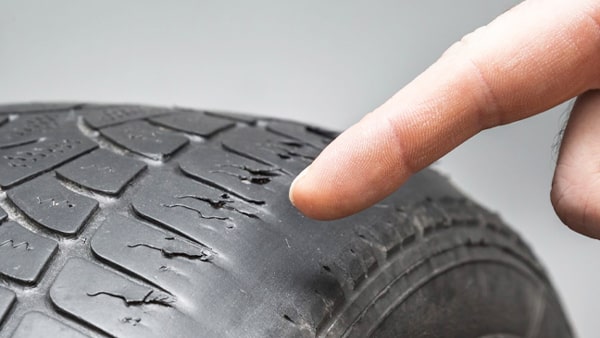
Worn tire tread is most likely to:

Worn or bald tires:
  1. A. Improve traction on wet pavement
  2. B. Make the vehicle slip or slide more easily
  3. C. Prevent skidding at highway speeds
  4. D. Improve steering response in rain

Correct answer: B. – Make the vehicle slip or slide more easily

Worn tires are more likely to slip or slide, especially when the roadway is wet. Washington considers tread below 2/32 inch unsafe when it meets the statutory measurement conditions. Regularly inspect tire tread and do not operate a vehicle with legally unsafe tires.

Source: RCW 46.37.420 – Tires—Restrictions, Washington State Driver Guide — § 2.5, “Tire Tread”