Washington Drivers Ed Practice Test 8

4.8 out of 5 (929 votes)
80% Passing score
20 Questions
4 Mistakes allowed
This Washington DOL practice test gives you a direct way to work through the rules that actually trip people up: intersections, right-of-way, and four-way stops. It is a 20-question multiple-choice Washington driver ed practice test, and you will need 16 correct answers to pass. That sounds tidy enough, but intersection questions can get a little slippery because they are rarely just about memorizing a sentence from the manual. They ask whether you understand timing, vehicle position, who arrived first, who is turning, and who needs to yield when everyone seems to be doing something at once. For teen drivers, this practice fits into Washington’s larger licensing path. Drivers ages 16 and 17 move through an instruction permit, then an intermediate driver license, before restrictions lift at age 18. A teen may apply for a permit at 15 if enrolled in an approved driver training course, or at 15½ after passing the knowledge test if not enrolled. Before applying for a first license at 16 or 17, the state expects more than a quick pass on a screen. You need to hold the permit for at least 6 months, complete approved driver training, log 40 hours of daylight practice and 10 hours at night, pass the knowledge test and the driving skills test, and keep your record clear of certain violations. So, yes, a Washington drivers ed practice test is partly about preparing for the DMV permit test. But it is also rehearsal for the habits you are supposed to carry into supervised driving and, eventually, the drive test itself. Washington requires a score of at least 80 out of 100 on the drive test, and intersection judgment is exactly the kind of thing that can show whether a driver is thinking ahead or just reacting late. Adult first-time drivers follow a different route. At 18 or older, Washington does not require teen driver training, the 6-month permit holding period, or the supervised hour totals. Adults still need to pass the required knowledge and drive tests unless they qualify for an exemption, and anyone who wants to practice on public roads before the drive test must use a learner permit with a licensed driver who has at least 5 years of experience seated in the front passenger seat. The real Washington DMV permit test questions are not published, and this practice test does not pretend otherwise. What it does offer is focused, realistic review of the rules you are expected to know, especially the intersection scenarios where careful reading and practical judgment matter more than guessing fast.
FREE DMV Practice Test App
Study for your Washington permit test or driver’s license with the NextDoorDriving app. 700+ DMV questions and answers, 100% free!
Download on the App Store

Sample Washington Permit Test Questions

Question 1

In Washington, how far before a turn must a required turn signal be given continuously?

  1. A. For at least the final 100 feet before the turn
  2. B. For at least the final 25 feet before the turn
  3. C. Only after entering the intersection
  4. D. Only while the steering wheel is turning

Correct answer: A. – For at least the final 100 feet before the turn

State law requires a turn signal to be given continuously during at least the final 100 feet traveled before turning. A driver must also make sure the turn or lateral movement can be completed with reasonable safety. Signaling does not by itself create the right-of-way.

Source: RCW 46.61.305(1), (2) – When signals required—Improper use prohibited

Question 2

May you drive through, around, or under a railroad-crossing gate while it is opening or closing?

  1. A. Yes, if no train is visible
  2. B. Yes, if your vehicle will not touch the gate
  3. C. Yes, after looking in both directions
  4. D. No

Correct answer: D. – No

Washington law prohibits driving through, around, or under a railroad-crossing gate while it is closed or being opened or closed. When a gate is lowered or another listed warning is active, stop between 15 and 50 feet from the nearest rail. Do not proceed until the crossing can be made safely.

Source: RCW 46.61.340(1)(b), (2) – Approaching railroad grade crossings

Question 3

Before making a turn in Washington, when must you begin signaling?

When you are planning to make a turn, you should activate your turn signals:
  1. A. Only when another road user is nearby
  2. B. As your vehicle enters the intersection
  3. C. Continuously for at least the final 100 feet before the turn
  4. D. About two vehicle lengths before the turn

Correct answer: C. – Continuously for at least the final 100 feet before the turn

Washington law requires a turn signal continuously during at least the final 100 feet traveled before turning. The movement must also be reasonably safe before it is made. Signaling communicates your intention, but you remain responsible for checking traffic and completing the turn safely.

Source: RCW 46.61.305(1)–(2) – When signals required—Improper use prohibited., Washington State Driver Guide — § 2.5, “Turn Signals”

Question 4

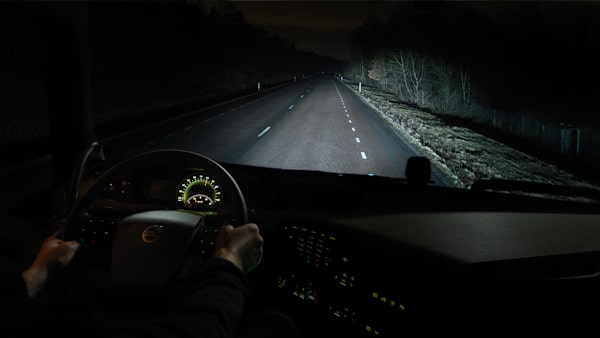
When driving at night, which road user may be especially difficult to detect because they may have no light?

At night, it is hardest to see:
  1. A. A traffic signal
  2. B. A pedestrian
  3. C. An oncoming vehicle with headlights
  4. D. A streetlight

Correct answer: B. – A pedestrian

A pedestrian may have no light and can be difficult to see after dark. The driver guides warn that unlighted road users are hard to detect and advise searching for dark shapes or shadows beyond the headlight beams. Reduce your speed and increase following distance when visibility is limited.

Source: Washington State Commercial Driver Guide — § 2.11.2, “Vision”, Washington State Driver Guide — § 5.6, “Night Driving”

Question 5

What is the effective way to lower the amount of alcohol in your body?

  1. A. Drink black coffee
  2. B. Eat a large meal
  3. C. Allow enough time for your body to process the alcohol
  4. D. Take a cold shower

Correct answer: C. – Allow enough time for your body to process the alcohol

Only the passage of time allows the body to remove alcohol. Eating, drinking coffee, or taking a cold shower does not lower the alcohol level in your body. Do not drive while alcohol remains in your system because it can continue to impair judgment, vision, attention, and motor skills.

Source: Washington State Commercial Driver Guide — § 2.22.1, “How Alcohol Works”

Question 6

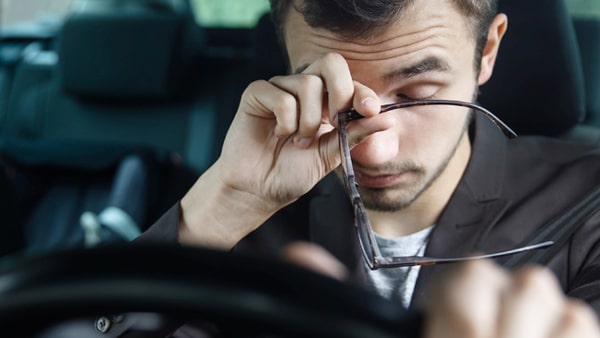
If you become too tired to keep your attention on driving, what should you do?

If you are driving and you feel that you cannot stay alert and awake, you:
  1. A. Open a window and drink coffee
  2. B. Turn up the music and talk with passengers
  3. C. Pull off the road safely and rest
  4. D. Increase speed to finish the trip sooner

Correct answer: C. – Pull off the road safely and rest

Fatigue impairs vision and judgment, while drowsiness reduces attention and reaction time. The driver guide directs motorists who show signs of fatigue to pull over and rest. If you are traveling alone and become tired, leave the roadway safely and take a short nap before continuing.

Source: Washington State Driver Guide — § 3.1, “Fatigue and Drowsy Driving”