Washington DMV Test Evaluation

4.6 out of 5 (5260 votes)
80% Passing score
10 Questions
2 Mistakes allowed
This Washington DOL practice test gives you a focused 10-question check before you move on to the real knowledge exam. It is short on purpose, which can be helpful, honestly, because a smaller practice test makes weak spots easier to see. You are not trying to prove you know everything in one sitting. You are trying to find out whether the basics are steady enough to keep building on. To pass this WA DMV permit practice test, aim for at least 8 correct answers out of 10. That lines up with the official Washington knowledge test standard, where you need 32 correct answers out of 40, or 80%. A passing score here is a good sign, but do not treat it like a guarantee. Ten questions can tell you a lot, yes, but the official DOL written test has more room to press on details you may have only half-studied. The question mix follows the same general territory covered in the Washington State Driver Guide. Expect traffic laws, right-of-way, lane use, intersections, speed, stopping distance, signals, pavement markings, and safe-driving judgment. Some of it feels straightforward when you are reading it. Then the answer choices get close together, and suddenly “I know this” turns into “I think I know this,” which is a very different thing. Road signs deserve their own attention, even though Washington treats them as part of the general knowledge test rather than a separate road-sign-only exam. You may see sign colors, shapes, regulatory signs, warning signs, work zone signs, school zone signs, railroad crossings, merge signs, pavement markings, and lane-use markings folded into regular Washington knowledge test practice. Study them that way. Do not save signs for later like they are some extra little chapter that will politely stay out of the way. This practice test also fits different Washington licensing paths. Teen applicants, adults applying for a first license, and new Washington residents may all need to deal with the knowledge test depending on their situation. Teens can begin the permit process as early as 15 if enrolled in an approved driver training course, while adults 18 or older are not required to complete teen driver training before testing. The route may change, but the rules still have to be learned. Use this Washington DMV permit practice test as a diagnostic, not a shortcut. Missed questions are not just wrong answers; they are the places to slow down, review the Driver Guide, and take another practice round before the official test starts costing real time and attention.

FREE DMV Practice Test App
Study for your Washington permit test or driver’s license with the NextDoorDriving app. 700+ DMV questions and answers, 100% free!
Download on the App Store

Sample Washington Permit Test Questions

Question 1

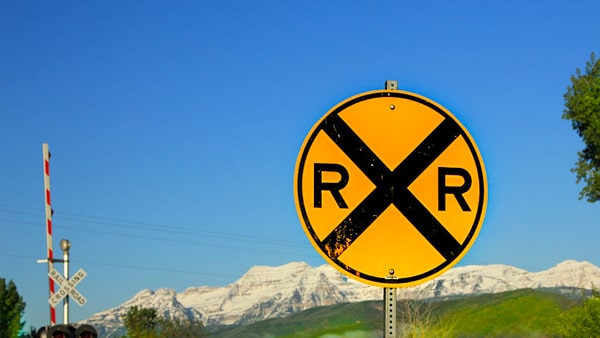
A round yellow sign marked with a black “X” and “RR” warns that you are approaching:

This sign is a warning that you are approaching:
  1. A. A four-way intersection
  2. B. A pedestrian crossing
  3. C. A railroad-highway crossing
  4. D. A blasting area

Correct answer: C. – A railroad-highway crossing

The round black-on-yellow sign is placed in advance of a public railroad-highway crossing. It tells drivers to slow down, look and listen for a train, and prepare to stop if necessary. The crossbuck, signals, or gates at the tracks provide additional instructions.

Source: Washington State Commercial Driver Guide — § 10.4.2, “Advance Warning Signs”

Question 2

A driver is following you too closely. Which adjustment gives you more room to avoid sudden braking?

  1. A. Reduce the space between you and the vehicle ahead
  2. B. Increase your following distance from the vehicle ahead
  3. C. Brake sharply to warn the following driver
  4. D. Accelerate above the speed limit

Correct answer: B. – Increase your following distance from the vehicle ahead

Increasing the space ahead reduces the chance that you will need to make a sudden speed or direction change. It can also make it easier for the following driver to pass. Avoid abrupt braking or other quick changes when another vehicle is following closely.

Source: Washington State Commercial Driver Guide — § 2.7.2, “Dealing with Tailgaters Safely”

Question 3

The posted limit is 55 mph, but the roadway is wet. Which speed rule applies?

  1. A. Always drive exactly 20 to 25 mph below the limit
  2. B. Reduce speed to a level that is reasonable for the wet conditions
  3. C. Maintain 55 mph because it is the posted limit

Correct answer: B. – Reduce speed to a level that is reasonable for the wet conditions

Washington law requires an appropriately reduced speed when weather or highway conditions create a special hazard. There is no fixed statewide rule requiring drivers always to subtract a particular number of miles per hour. The Driver Guide advises slowing down on wet roads to reduce the risk of hydroplaning and loss of traction.

Source: RCW 46.61.400(1), (3) – Basic rule and maximum limits, Washington State Driver Guide — § 5, “Hydroplaning”

Question 4

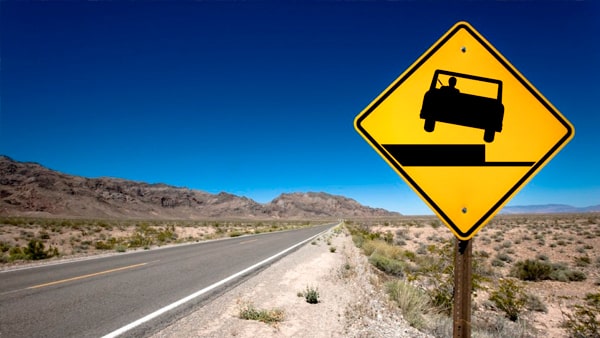
A yellow diamond sign shows the pavement edge dropping to a lower shoulder. What hazard does it identify?

What should you be most concerned about when you see this sign?
  1. A. Your headlights may become misaligned
  2. B. The shoulder contains standing water
  3. C. The travel lane rises sharply ahead
  4. D. Steering may become difficult if your wheels cross the pavement edge

Correct answer: D. – Steering may become difficult if your wheels cross the pavement edge

This sign warns of a sharp drop between the pavement and the shoulder. Crossing that edge can make the vehicle difficult to steer while leaving or returning to the roadway. Maintain control and avoid drifting across the pavement edge at speed.

Source: Washington State Commercial Driver Guide — § 2.8, “Drop Off”

Question 5

Traffic is traveling at 50 mph on a road posted at 45 mph. What is the fastest you may legally drive?

  1. A. 50 mph because it matches traffic
  2. B. Any speed from 45 to 50 mph
  3. C. 45 mph

Correct answer: C. – 45 mph

Washington treats an established speed limit as the maximum lawful speed unless another rule authorizes a change. Traveling with faster traffic does not permit you to exceed the posted 45 mph limit. Weather, visibility, traffic, or other hazards may require you to drive even slower.

Source: RCW 46.61.400(1)–(3) – Basic rule and maximum limits

Question 6

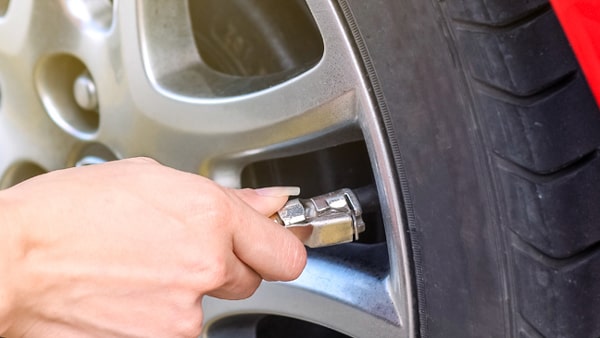
Keeping tires inflated to the manufacturer’s recommended pressure helps support:

If your tires are not inflated to the pressure recommended by the manufacturer, it may cause:
  1. A. Proper vehicle handling
  2. B. Better fuel economy
  3. C. Neither handling nor fuel economy
  4. D. Both proper handling and better fuel economy

Correct answer: D. – Both proper handling and better fuel economy

Low tire pressure can adversely affect how a vehicle handles. Properly inflated tires also support better gas mileage. Find the recommended pressure on the Tire and Loading Information label near the driver’s door or in the vehicle owner’s manual, rather than relying on the number molded into the tire.

Source: Washington State Driver Guide — § 2.5, “Tire Pressure”; Ch. 3, “How You Drive Impacts the Environment”