


Ohio BMV Practice Test 5

4.8 out of 5 (1179 votes)
80% Passing score
20 Questions
4 Mistakes allowed
Ohio’s temps process is pretty direct on paper, but there are a few details adult drivers need to keep straight from the beginning. First-time adult applicants have to pass the vision screening, pass the 40-question knowledge test, and then purchase the Temporary Instruction Permit Identification Card — the TIPIC — within 60 days. That last deadline is easy to miss if you are thinking of the knowledge test as the finish line. It is not. It is the step that lets you start practicing legally. This Ohio temps practice test is built for that early stage, when you are preparing for the Ohio BMV learners permit test and trying to make the rules feel less like a pile of handbook paragraphs. It is the fifth Ohio BMV practice test on our site, with 20 questions focused on blood alcohol content, DUI laws, impaired driving, and the consequences that come with making a bad decision behind the wheel. A little heavy, sure, but Ohio does expect you to know this material before you start driving with a licensed adult age 21 or older in the passenger seat. The test gives you a results summary when you finish, including the questions you missed and the correct answers. That feedback is not just there to make the page feel complete. It is where a lot of the studying actually happens, because BAC limits and DUI penalties are exactly the kind of topics that can feel familiar until the answer choices start splitting hairs. Read the missed answers slowly, even the ones you nearly got right. Especially those, honestly. After you get your TIPIC, the licensing process keeps moving. Adult applicants still need supervised practice before scheduling the maneuverability and road skills tests. If you are 21 or older and fail your first driving test, Ohio may require an Abbreviated Adult Driver Training Course before your second attempt, unless you completed an approved driver education course within the previous year. Temporary residents age 21 or older have extra requirements too, including classroom or online instruction, behind-the-wheel time, supervised driving hours, nighttime practice, and a 14-day TIPIC holding period. Use this Ohio BMV permit practice test with the Ohio Driver Manual, road sign charts, flashcards, and driver education materials. Taken together, they give you a better shot at walking into the BMV knowledge test prepared, not just hopeful.
FREE DMV Practice Test App
Study for your Ohio permit test or driver’s license with the NextDoorDriving app. 700+ DMV questions and answers, 100% free!
Download on the App Store

Sample Ohio Permit Test Questions

Question 1

On an Ohio two-way road, when may you cross a double solid yellow center line?

  1. A To pass a car traveling near the speed limit
  2. B Whenever the road is clear during daylight
  3. C Any time no police officer is present
  4. D To turn left into a driveway when the movement is safe

Correct answer: D – To turn left into a driveway when the movement is safe

Double solid yellow lines generally prohibit passing, but a driver may cross the center line to turn left into or from an alley, private road, or driveway. The driver must yield to approaching traffic before making the turn. A separate, limited exception permits passing certain vehicles traveling at less than half the speed limit when every statutory condition is satisfied.

Source: Ohio Rev. Code § 4511.25(C) — Lanes of travel upon roadways, Ohio Rev. Code § 4511.31 — Establishing hazardous zones, Ohio Driver Manual — § 4, “Lane Pavement Markings”
Question 2

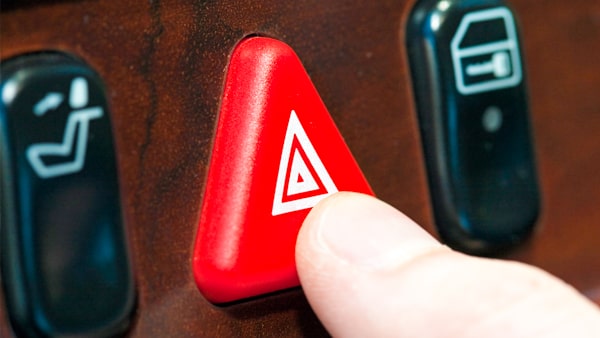
What should you do if your vehicle breaks down and is disabled near the roadway?

You should always use your emergency flashers when:
  1. A Leave the headlights off to conserve the battery
  2. B Remain in the traffic lane without displaying a warning
  3. C Move away from traffic if possible and turn on the emergency flashers
  4. D Use only one turn signal as a warning

Correct answer: C – Move away from traffic if possible and turn on the emergency flashers

If possible, move a disabled vehicle off the road and away from traffic. Turn on the emergency flashers to show other drivers that the vehicle is disabled. The driver manual also recommends warning approaching traffic with emergency flares when they are available and can be placed safely.

Source: Ohio Driver Manual — § 10, “Vehicle Breakdown”

Question 3

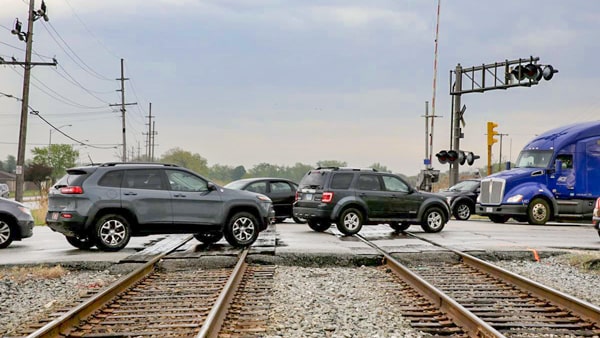
Heavy traffic is backed up beyond an Ohio railroad crossing. When may you proceed across the tracks?

When traffic is slow and heavy and you must cross railroad tracks before reaching the upcoming intersection, you should:
  1. A When the crossing gate begins to rise
  2. B When the traffic signal beyond the tracks turns green
  3. C Only when enough space exists to clear the crossing completely
  4. D After sounding the horn to warn other drivers

Correct answer: C – Only when enough space exists to clear the crossing completely

A driver must stop before a railroad crossing when there is not enough space beyond it to accommodate the vehicle without creating an obstruction. This requirement applies even if a traffic signal indicates that the driver may proceed. Wait until traffic has moved far enough ahead for the entire vehicle to clear the tracks.

Source: Ohio Rev. Code § 4511.62(A)(1)(d), (g) — Stopping at railroad grade crossing

Question 4

Which equipment use is generally prohibited while operating a motor vehicle in Ohio?

  1. A Listening through the vehicle's built-in speakers
  2. B Using a properly adjusted hands-free system
  3. C Wearing an audio device over one ear
  4. D Wearing earphones over both ears

Correct answer: D – Wearing earphones over both ears

Ohio law prohibits operating a motor vehicle while wearing earphones over, or earplugs in, both ears. Exceptions include hearing aids and certain on-duty personnel, highway workers, refuse-equipment operators, and motorcyclists using hearing protection. A first violation is generally a minor misdemeanor, with higher misdemeanor levels possible after prior predicate traffic offenses.

Source: Ohio Rev. Code § 4511.84 — Earphones or earplugs on operator prohibited

Question 5

An argument with a passenger becomes emotional and takes your attention from driving. What should you do?

  1. A Drive faster to end the trip sooner
  2. B End the argument and return your full attention to driving
  3. C Continue the discussion while watching the passenger
  4. D Use your phone to ask someone else for advice

Correct answer: B – End the argument and return your full attention to driving

A distraction includes mental activity that takes attention away from driving or impairs safe vehicle operation. The driver manual specifically advises motorists to avoid arguments and emotional conversations while driving. End the distracting exchange and concentrate on the roadway, surrounding traffic, and vehicle control.

Source: Ohio Driver Manual — § 3, “Distracted Driving”

Question 6

How should a lap-and-shoulder safety belt be worn?

  1. A With the shoulder portion behind your back
  2. B With the shoulder belt across the chest and the lap belt low and snug over the hips
  3. C With both portions resting across the stomach
  4. D With the shoulder portion tucked under your arm

Correct answer: B – With the shoulder belt across the chest and the lap belt low and snug over the hips

Both portions of a lap-and-shoulder belt must be positioned correctly. The shoulder belt should cross the shoulder and chest with minimal slack, while the lap belt should fit low and snug across the hips. Wearing the shoulder portion behind the back or under the arm can contribute to serious internal injuries during a crash.

Source: Ohio Driver Manual — § 2, “Safety Restraints”