Ohio DMV Test Evaluation

4.5 out of 5 (5901 votes)
80% Passing score
10 Questions
2 Mistakes allowed
This Ohio temps practice test gives you a clean first read on whether your permit-test knowledge is actually holding together. It is 10 questions, not a marathon, and that is the point. You get a focused check on the material Ohio expects TIPIC applicants to know: traffic signs, right-of-way, highway traffic control devices, safe driving practices, basic motor vehicle laws, and the little driver-responsibility details that tend to hide in the Ohio Driver Manual until they show up on a test screen. To pass this practice temps test, you need 8 correct answers out of 10. A passing score is a good sign, yes, but do not treat it like a victory lap just yet. The official Ohio permit knowledge test is bigger and less forgiving in its own quiet way: 40 multiple-choice questions, with 30 correct answers required to pass. So this Ohio BMV practice test works best as an early diagnostic — a short, practical way to see what you know, what you half-know, and what you have been sort of guessing your way through, which, fine, happens. After each attempt, you can review the questions you missed along with the correct answers. That review matters. It turns the test from a simple score into something you can actually use, especially if road signs, right-of-way, or traffic-control wording keeps tripping you up in the same irritating pattern. And because the test works on mobile and desktop, you can fit another round in wherever studying realistically happens — at a desk, on the couch, in a parked car before an appointment, wherever. Ohio lets applicants begin the TIPIC process at 15 years and 6 months. After passing the official knowledge test and vision screening, you must purchase the TIPIC within 60 days at a Deputy Registrar License Agency. Applicants under 18 need a parent or guardian to co-sign, and drivers under 21 have the bigger licensing package ahead: 24 hours of classroom or online instruction, 8 hours of driver training, 50 supervised driving hours, and at least 10 of those at night. Use this Ohio temporary license practice test as your starting gauge, then keep practicing. One good score is encouraging. Several good scores, across fresh questions and different topics, are much better evidence that you are ready for the real BMV permit test.
FREE DMV Practice Test App
Study for your Ohio permit test or driver’s license with the NextDoorDriving app. 700+ DMV questions and answers, 100% free!
Download on the App Store

Sample Ohio Permit Test Questions

Question 1

Before pulling from a parallel curb space into traffic, which observation step should you take?

  1. A Sound the horn
  2. B Activate the hazard lights
  3. C Turn your head to check traffic and the blind spot
  4. D Look only in the inside rearview mirror

Correct answer: C – Turn your head to check traffic and the blind spot

Turn your head and look over your shoulder toward the traffic lane because mirrors do not reveal every blind spot. Ohio law requires due care to determine that moving right or left can be done with reasonable safety. Give the appropriate signal before pulling into traffic.

Source: Ohio Rev. Code § 4511.39(A) – Turn and stop signals, Ohio Driver Manual — § 5, “Changing Lanes”

Question 2

A normal right turn from a two-way street onto another two-way street should finish in:

  1. A The left lane
  2. B The lane farthest from the curb
  3. C The rightmost portion nearest the curb
  4. D Any open lane

Correct answer: C – The rightmost portion nearest the curb

Ohio law requires the approach and the right turn to be made as close as practicable to the right-hand curb or roadway edge. The driver manual directs motorists to turn from the rightmost portion of their lane into the rightmost portion of the street entered. Signs or pavement markings may require a different turning path.

Source: Ohio Rev. Code § 4511.36(A)(1), (C) – Rules for turns at intersections, Ohio Driver Manual — § 5, “Intersections and Turning,” “Right Turns”

Question 3

When a two-lane-road pass requires using the oncoming lane, you must return to an authorized lane before coming within:

  1. A 100 feet of an approaching vehicle
  2. B 200 feet of an approaching vehicle
  3. C 300 feet of an approaching vehicle
  4. D 500 feet of an approaching vehicle

Correct answer: B – 200 feet of an approaching vehicle

Ohio law permits a pass to the left only when the roadway is clearly visible and free of oncoming traffic for sufficient distance. The pass must be completed without interfering with approaching or overtaken traffic. When the opposing lane is used, the passing vehicle must return to an authorized lane before coming within 200 feet of an approaching vehicle.

Source: Ohio Rev. Code § 4511.29(A) – Driving to left of center of roadway in overtaking and passing traffic proceeding in same direction

Question 4

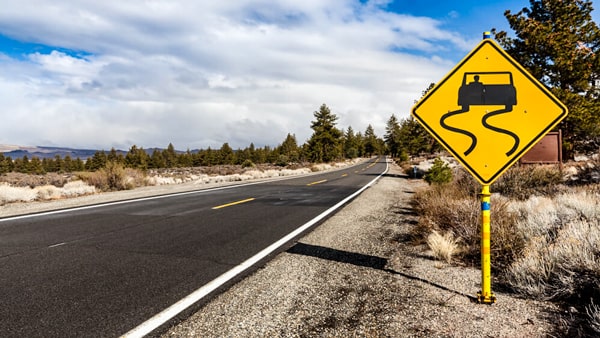
Which driving technique is appropriate on a slippery roadway?

When roads are slippery, you should:
  1. A Reduce your following distance
  2. B Brake hard before traveling uphill
  3. C Reduce speed and avoid abrupt turns or stops
  4. D Stop immediately in the travel lane

Correct answer: C – Reduce speed and avoid abrupt turns or stops

On a slippery surface, tires provide less grip, stopping takes longer, and turning without skidding becomes more difficult. Reduce speed and leave additional space ahead. Smooth steering and braking help avoid the sudden actions that can cause a skid.

Source: Ohio Driver Manual — § 8, “Speed Management—Adjusting to Roadway Conditions,” “Slippery Roads”, Ohio Driver Manual — § 10, “Avoiding Crashes,” “Skids”

Question 5

What are you required to do at a STOP sign?

When you see this sign, you must:
  1. A Stop completely at the required point and yield before entering
  2. B Slow down and continue if the road appears empty
  3. C Stop beyond the crosswalk and wait for a green light
  4. D Slow down, check once, and proceed without stopping

Correct answer: A – Stop completely at the required point and yield before entering

Stop at the marked stop line. If none exists, stop before the near crosswalk or at the nearest point with a view of approaching traffic. After stopping, Ohio law requires you to yield to vehicles in the intersection or approaching closely enough to present an immediate hazard.

Source: Ohio Rev. Code § 4511.43(A) – Right-of-way rule at through highways, stop signs, yield signs

Question 6

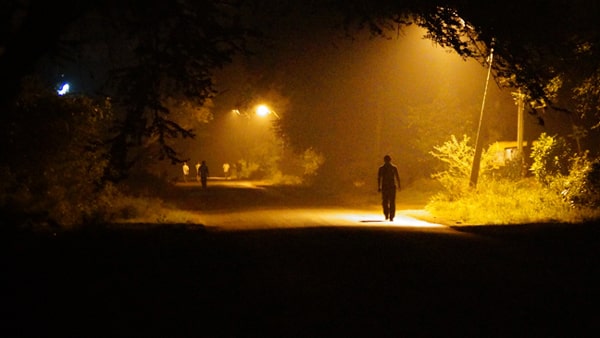
When driving at night on a dimly lit street, how should you choose your speed?

When driving in traffic at night on a dimly lit street, you should:
  1. A Use a cautious, reasonable speed that accounts for limited headlight visibility
  2. B Keep high beams on even when an oncoming vehicle approaches
  3. C Keep the instrument-panel lights as bright as possible
  4. D Use hazard lights during normal travel

Correct answer: A – Use a cautious, reasonable speed that accounts for limited headlight visibility

Night driving is more hazardous because the distance visible ahead is limited by the vehicle’s headlights. The driver manual directs motorists to maintain a cautious and reasonable speed. High beams should be dimmed for approaching traffic rather than used in a way that interferes with another driver’s vision.

Source: Ohio Driver Manual — § 7, “Night Driving”