Washington DC Permit Test Simulator

4.7 out of 5 (573 votes)
80% Passing score
25 Questions
5 Mistakes allowed
=The DC permit test is not there to gently applaud your common sense. It checks the stuff DC DMV actually expects you to know: traffic laws, road signs, signals, pavement markings, parking rules, safe driving habits, and the little legal details that have a way of showing up right when you were hoping for an easy question. And because the test is based on the official DC DMV Automobile Driver Manual, studying from vague memory or “I’ve seen people drive like this before” is, well, not the strongest strategy. This Washington DC DMV practice test gives you a sharper way to prepare. The simulator changes the questions each time you use it, so you are not just memorizing a neat little answer pattern and calling that preparation. You are learning how the rules feel when they are asked in different ways, which is closer to what happens on the real DC DMV knowledge test. Road signs, right-of-way, traffic signals, DUI rules, insurance requirements, safe operation, driver responsibility—those topics all start to settle in after a few rounds. Not perfectly at first, usually. That is normal. A little ugly, even useful. For GRAD applicants ages 16 through 20, the real learner permit knowledge test has 30 questions, and you need 24 correct to pass. Adults age 21 and older get 25 questions and need 20 correct. Same basic pressure: an 80% score. That leaves enough room for a mistake or two, but not enough room to coast through half-prepared. Also worth knowing before you get too casual about it: if you fail the knowledge test, DC DMV makes you wait 3 full calendar days before retesting. Use this DC permit practice test as a rehearsal, but a practical one. Take it on your phone, take it at home, take it again after you miss the same sign question twice and pretend you are not irritated by it. The point is to catch weak spots while they are still private, fixable, and nowhere near a DMV service center. By the time you sit for the real Washington DC learners permit test, the goal is not to feel lucky. The goal is to recognize the rule, choose the answer, and move on without making the whole thing more dramatic than it needs to be.
FREE DMV Practice Test App
Study for your Washington DC permit test or driver’s license with the NextDoorDriving app. 700+ DMV questions and answers, 100% free!
Download on the App Store

Sample Washington DC Permit Test Questions

Question 1

What should you do before moving into another lane?

  1. A Signal and check only the rearview mirror
  2. B Signal, check the mirrors and blind spot, and verify the lane is clear
  3. C Signal and move over immediately before another vehicle closes the gap
  4. D Accelerate first, then signal while crossing the lane line

Correct answer: B – Signal, check the mirrors and blind spot, and verify the lane is clear

Signal your intended movement and check the mirrors for surrounding traffic. Briefly look over your shoulder to check the blind spot, and verify that adequate space is available before crossing the lane line. District regulations require a driver to ascertain that a lane change can be made safely before leaving the current lane.

Source: 18 DCMR § 2201.6(a) – Driving on the Right Side of the Roadway: Proper Use of the Roadway, DC DMV Automobile Driver Manual — “Changing Lanes”

Question 2

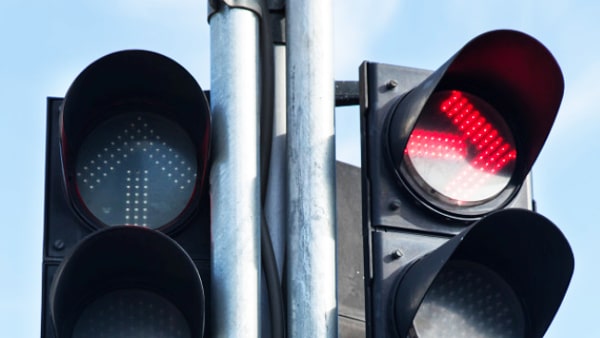
What must a driver facing a steady red right-turn arrow do?

A red arrow pointing to the right on a traffic light means you may:
  1. A Stop, then turn right after yielding
  2. B Remain stopped until a green arrow or flashing yellow arrow appears
  3. C Slow down and turn if the intersection appears clear
  4. D Turn if waiting would delay traffic behind the vehicle

Correct answer: B – Remain stopped until a green arrow or flashing yellow arrow appears

A steady red arrow requires traffic intending to move in the arrow's direction to stop. Unlike an ordinary steady red signal, it does not permit a right turn after stopping. The driver must remain stopped until a green arrow or flashing yellow arrow authorizes the movement.

Source: 18 DCMR § 2103.8 – Traffic Control Signals: Vehicles

Question 3

If your engine stalls while the vehicle is moving, which actions are appropriate?

  1. A Grip the steering wheel firmly because steering may become harder
  2. B Shift into Neutral before attempting to restart the engine
  3. C Use the hazard lights and steer off the roadway if it will not restart
  4. D All of these actions

Correct answer: D – All of these actions

Keep a firm grip on the wheel because power steering assistance may be reduced. Shift to Neutral and attempt to restart the engine while maintaining control. If the engine does not restart, activate the hazard lights and carefully move the vehicle out of the traffic lanes before stopping.

Source: DC DMV Automobile Driver Manual — “Engine Stalls”

Question 4

When driving near a large truck, what should you remember about its stopping ability?

When sharing the road with a truck, it is important to remember that, in general, trucks:
  1. A It generally needs more distance to stop than a passenger car
  2. B It can stop more quickly when traveling downhill
  3. C Its weight allows it to stop within a shorter distance
  4. D It needs less stopping distance when fully loaded

Correct answer: A – It generally needs more distance to stop than a passenger car

Large trucks generally require more distance to stop than passenger vehicles, particularly at highway speeds or when carrying a heavy load. Do not move closely in front of a truck after passing because the truck driver needs adequate following and braking space. Leave a substantial gap before returning to the lane.

Source: DC DMV Automobile Driver Manual — “Sharing the Road with Trucks”

Question 5

Your signal turns green, but vehicles are still blocking the intersection. What should you do?

  1. A Enter the intersection and wait for them to move
  2. B Drive around them if another part of the intersection is open
  3. C Remain behind the crosswalk until you can completely clear the intersection
  4. D Enter because the green signal gives you an absolute right-of-way

Correct answer: C – Remain behind the crosswalk until you can completely clear the intersection

A green signal permits movement only when the way is available, and drivers must yield to traffic lawfully within the intersection. District regulations also prohibit entering an intersection or marked crosswalk unless your vehicle can completely clear it. Wait behind the crosswalk until sufficient space is available on the other side.

Source: 18 DCMR § 2103.3 – Traffic Control Signals: Vehicles, 18 DCMR § 2201.11 – Driving on the Right Side of the Roadway: Proper Use of the Roadway

Question 6

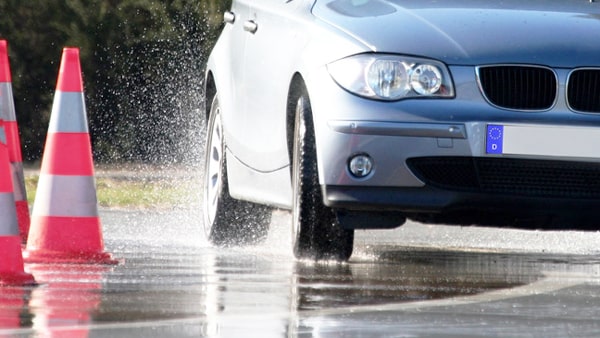
When can a road be especially slippery during rainfall?

The road surface is most slippery:
  1. A Only during a severe storm
  2. B After several hours of steady rain
  3. C When rain first begins, particularly after a dry period
  4. D Only after the rain has completely stopped

Correct answer: C – When rain first begins, particularly after a dry period

Roads can be especially slippery when rain first begins after a dry period. Water mixes with accumulated oil, dust, and other material before the rain has had time to wash it away. Reduce speed and allow additional space because wet pavement provides less tire traction than dry pavement.

Source: 18 DCMR § 2200.5 – Speed Restrictions, DC DMV Automobile Driver Manual — “Driving in Rain”