


Washington DC Drivers Ed Practice Test 8

4.8 out of 5 (119 votes)
80% Passing score
20 Questions
4 Mistakes allowed
DC driving has its own little personality, and honestly, it is not always a charming one. One minute you are easing through a four-way stop near Capitol Hill, the next you are trying to figure out whether that pedestrian, cyclist, delivery driver, and deeply committed left-turner are all about to move at the same time. So yes, right-of-way rules matter here. They matter a lot. This DC DMV practice test leans into those everyday judgment calls, especially intersections, four-way stops, traffic flow, and the kind of rule knowledge that keeps you from becoming the person everyone else is honking at. This DC learners permit practice test gives you 20 multiple-choice questions pulled from a larger pool, which means you are not just memorizing one tidy little set of answers and calling it preparation. That would be convenient, sure, but not especially useful. The questions are designed to help with the Washington DC drivers ed written test, while also getting you more comfortable with the stuff that shows up later when the testing moves from a screen to an actual car. And that is where things get a little more serious. The road skills test checks whether you can safely operate a vehicle, use your turn signals, parallel park, and handle the basic driving tasks that suddenly feel much less basic when there is an examiner sitting beside you. Applicants ages 16 through 20 need to pass that road skills test to qualify for a provisional license. You can take the non-commercial road test through DC DMV personnel or a third-party tester, but if you go through DC DMV, make an appointment. Walk-ins are not accepted, which is the kind of detail that ruins a morning before the test even begins. Bring the right things, too: a valid learner permit, a licensed driver who is at least 21, a properly registered vehicle, proof of insurance, and seat belts that actually work and get used. If you are under 21, you will also need the 40-hour Certification of Eligibility for Provisional License form. And please do not drive yourself there alone with only a learner permit. DC DMV says doing that means you will not be allowed to test for 6 months, which is a very long punishment for one bad decision. If you fail the road skills test, you must wait 72 hours before trying again. Rack up 6 failed road tests within 12 months, and the 7th cannot happen until 12 months after the first failed test. So this free drivers ed practice test is not just a warm-up for the written exam. With hints, answer explanations, and a focus on real DC driving rules, it is a quieter way to fix mistakes before they become expensive, awkward, or both.
FREE DMV Practice Test App
Study for your Washington DC permit test or driver’s license with the NextDoorDriving app. 700+ DMV questions and answers, 100% free!
Download on the App Store

Sample Washington DC Permit Test Questions

Question 1

What must a driver do at a red, octagonal STOP sign?

This sign means:
  1. A Slow down and stop only if another vehicle is approaching
  2. B Come to a complete stop and proceed only when permitted and safe
  3. C Drive through cautiously without stopping if the road looks clear
  4. D Stop only for traffic on the intersecting road

Correct answer: B – Come to a complete stop and proceed only when permitted and safe

A STOP sign requires a complete cessation of movement. In the District, stop at the marked stop line; if none exists, stop before entering the near crosswalk or at the nearest point with a view of intersecting traffic. After stopping, yield as required and proceed only when the movement can be made safely.

Source: 18 DCMR § 2208.3 – Right-of-Way: Intersections, DC DMV Driver Manual — Traffic Rules, “Stop Means Cease Movement and No Rolling Stops”
Question 2

Which statement correctly describes the protection provided by seat belts?

  1. A They help only when traveling faster than 40 mph
  2. B They are useful only on highways
  3. C They provide little protection during lower-speed trips
  4. D They greatly increase an occupant's chance of surviving a crash

Correct answer: D – They greatly increase an occupant's chance of surviving a crash

Properly fastening a seat belt is one of the most important actions an occupant can take for protection. The DC manual explains that buckling up drastically increases the chance of surviving a crash. Its protective value is not limited to highway travel or to a particular speed category.

Source: DC DMV Driver Manual — Seat Belts, “Seat Belts Must Be Worn”

Question 3

When parking downhill on a road without a curb, where should the front wheels point?

  1. A Toward the center of the roadway
  2. B Straight and parallel with the roadway
  3. C Toward the edge of the roadway
  4. D In either direction because no curb is present

Correct answer: C – Toward the edge of the roadway

When parking on an uphill or downhill grade without a curb, turn the front wheels toward the road's edge, where a curb would normally be. Place an automatic transmission in park, or leave a manual transmission in gear, and engage the parking brake. This wheel position directs the vehicle away from moving traffic if it begins to roll.

Source: DC DMV Driver Manual — Parking Rules, “Parking on a Hill”

Question 4

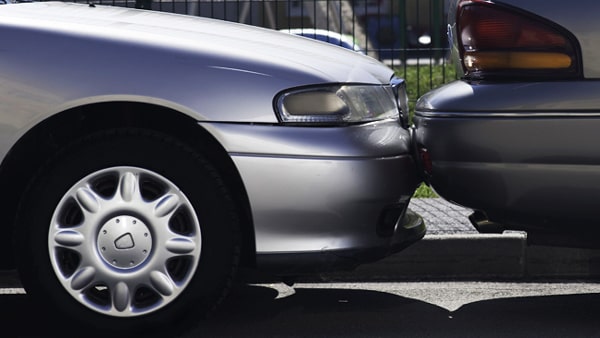
You strike an unattended parked vehicle and cannot locate its owner. What must you do before leaving?

If you hit a parked car and cannot find the owner, you:
  1. A Notify only your insurance company
  2. B Leave without notice if the damage appears minor
  3. C Securely attach written identifying information to the vehicle
  4. D Wait at the location indefinitely

Correct answer: C – Securely attach written identifying information to the vehicle

A driver may not simply leave after colliding with unattended property. If the owner or operator cannot be located, District law requires the driver to leave the required identifying information securely attached in a conspicuous place. This provides notice to the owner and creates a record of who was operating the striking vehicle.

Source: D.C. Code § 50-2201.05c – Leaving After Colliding

Question 5

Which factor commonly increases risk for beginning teenage drivers?

  1. A Naturally slow reflexes
  2. B An unwillingness to take any risk
  3. C Limited driving skill and experience
  4. D A tendency to drive below every speed limit

Correct answer: C – Limited driving skill and experience

Safe driving requires skill, experience, responsibility, and judgment, all of which develop with practice. The District's GRAD program is designed to let novice drivers gain experience in stages before receiving unrestricted privileges. Beginning drivers should use supervised practice to strengthen vehicle control, hazard recognition, and decision-making skills.

Source: DC DMV Driver Manual — Driver Information, “Be In Shape to Drive”, DC DMV Driver Manual — Types of Driver Licenses & Permits, “Gradual Rearing of Adult Drivers (GRAD) Program”

Question 6

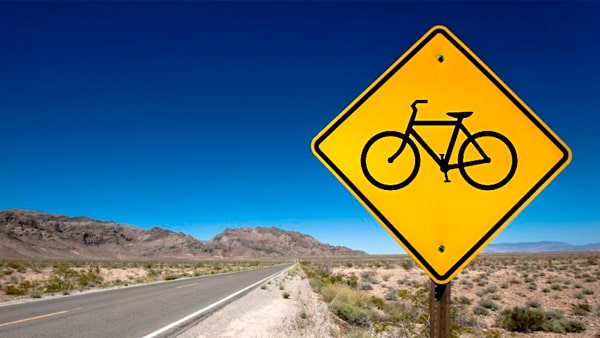
A yellow diamond-shaped sign displaying a bicycle warns that:

This sign means:
  1. A A children's play area is immediately ahead
  2. B Bicycle rentals are available nearby
  3. C Motor vehicles are entering a parking area
  4. D Bicycles regularly cross or travel beside traffic in the area

Correct answer: D – Bicycles regularly cross or travel beside traffic in the area

The bicycle crossing or bike path sign warns that bicyclists regularly cross the roadway or ride beside traffic in that area. Reduce speed as conditions require and watch carefully for bicycle traffic. Because it is a warning sign, it alerts drivers to a potential hazard rather than establishing a rental location or recreational area.

Source: DC DMV Driver Manual — Warning Traffic Signs, “Bicycle Crossing/Bike Path”