


Washington DC Permit Practice Test 4

4.9 out of 5 (184 votes)
80% Passing score
20 Questions
4 Mistakes allowed
Driving in Washington, DC has a way of making small mistakes feel bigger than they should. A missed sign, a bad lane choice, a child seat that is technically “in” the car but not really installed correctly. That last one matters more than people like to admit. This DC DMV practice test focuses on child safety seat use and installation, while also keeping you tied to the wider rules that show up in permit test practice and, eventually, real driving. The test includes 20 multiple-choice questions, and you will need at least 16 correct answers to pass. It is built around current DC driving laws for 2026, with special attention on how young passengers should be secured. Not in a vague “be safe out there” kind of way, either. The questions push you to notice the details: where a child should sit, how restraints are supposed to work, and why proper seat use is part of responsible driving, not some extra parenting footnote tucked into the manual. And then, because DC licensing does not stop at the written exam, there is the road skills test waiting later on. Applicants ages 16 through 20 must pass it to qualify for a provisional license. That test checks whether you can safely operate a vehicle, use turn signals, parallel park, and handle the normal driving tasks that suddenly feel less normal when someone is watching from the passenger seat with a clipboard. The road test can be taken with DC DMV personnel or through a third-party tester, but if you go through DC DMV, you need an appointment. Walk-ins are not accepted. The paperwork and setup matter, too, unfortunately. You will need a valid learner permit, a licensed driver age 21 or older, a vehicle with valid registration, proof of insurance, and proper seat belt use. If you are under 21, bring the 40-hour Certification of Eligibility for Provisional License form. Also, do not drive yourself alone to the road test appointment on a learner permit. DC DMV says that can keep you from testing for 6 months, which is a fairly brutal consequence for one bad decision. As you work through this Washington DC DMV permit practice test, you will get immediate feedback and explanations after each question. Hints are available when a question gets fussy. By the end, you should have a stronger grip on child passenger safety, DC driving permit practice, and the licensing steps that come after the written test.
FREE DMV Practice Test App
Study for your Washington DC permit test or driver’s license with the NextDoorDriving app. 700+ DMV questions and answers, 100% free!
Download on the App Store

Sample Washington DC Permit Test Questions

Question 1

At an unsignalized intersection with no painted crosswalk lines, a pedestrian is crossing between the sidewalk edges. What must a driver do?

  1. A Yield only if a WALK signal is displayed
  2. B Proceed because there is no marked crosswalk
  3. C Stop and give the pedestrian the right-of-way
  4. D Yield only if the pedestrian is using a mobility device

Correct answer: C – Stop and give the pedestrian the right-of-way

The area connecting the sidewalks at an intersection may be an unmarked crosswalk even though no lines are painted. When signals are absent or not operating, a driver must stop and yield to a pedestrian crossing within a marked or unmarked crosswalk. A pedestrian crossing elsewhere generally has a different duty to yield.

Source: 18 DCMR § 2208.12 – Right-of-Way: Intersections, 18 DCMR § 2304.2 – Crossing at Places Other Than Crosswalks
Question 2

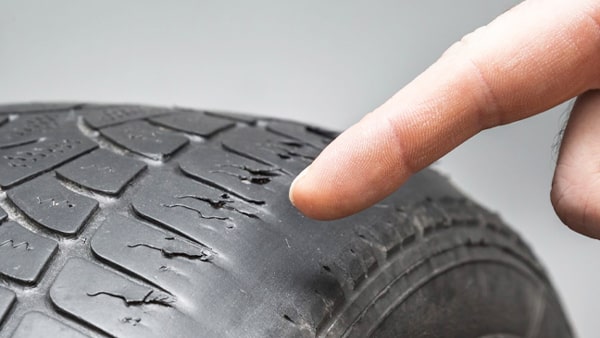
Which problems can result from driving on badly worn tires?

Worn or bald tires:
  1. A Longer stopping distances and reduced control
  2. B A greater chance of hydroplaning on wet pavement
  3. C An increased risk of tire damage or failure
  4. D All of these problems

Correct answer: D – All of these problems

Worn tires have less tread available to grip the roadway and move water away from the contact surface. This can increase stopping distance, reduce steering control, and make hydroplaning more likely. Excessive wear or damage also increases the possibility of tire failure, so tires should be inspected and replaced when necessary.

Source: 18 DCMR § 732 – Tire Equipment, DC DMV Automobile Driver Manual — “Tires”

Question 3

A pedestrian is already crossing at a corner within an unmarked crosswalk. What should you do?

  1. A Continue because only marked crosswalks give pedestrians priority
  2. B Sound the horn and pass behind the pedestrian
  3. C Stop and allow the pedestrian to cross safely
  4. D Stop only if the pedestrian reaches the center of your lane

Correct answer: C – Stop and allow the pedestrian to cross safely

A driver must recognize both marked crosswalks and unmarked crosswalks at intersections. District regulations require drivers to stop and give the right-of-way to a pedestrian crossing within either type when traffic signals are absent or not operating. Wait until proceeding will not interfere with the pedestrian's safe crossing.

Source: 18 DCMR § 2208.12 – Right-of-Way: Intersections

Question 4

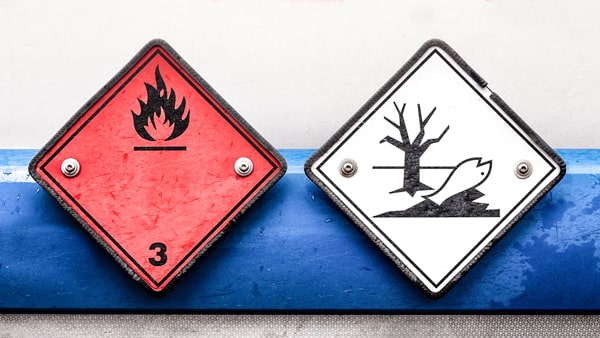
A truck displaying a diamond-shaped hazardous-material placard approaches railroad tracks. What should you expect the driver to do?

Which of the following is true about vehicles displaying a diamond-shaped sign (indicating a hazardous load)?
  1. A Avoid every freeway route
  2. B Continue across without reducing speed if no train is visible
  3. C Slow down and stop before crossing to check that the tracks are clear
  4. D Enter the crossing before other traffic because of the cargo

Correct answer: C – Slow down and stop before crossing to check that the tracks are clear

A diamond-shaped placard identifies a vehicle transporting regulated hazardous materials. District law requires a commercial motor vehicle driver to slow and stop before reaching a railroad crossing to check that the tracks are clear of an approaching train. The vehicle may proceed only after the driver has completed the required safety check.

Source: D.C. Code § 50-405.01(a)(1) – Commercial Motor Vehicle Operation; Additional Requirements, Violation, Adjudication, DC Commercial Driver License Manual — “Railroad-Highway Crossings”

Question 5

A school bus ahead in your lane is stopped with its warning lights flashing. What must you do?

  1. A Stop at least 15 feet away and remain stopped until the warnings are deactivated
  2. B Change lanes and pass slowly
  3. C Proceed after you believe all passengers have boarded
  4. D Slow down and pass unless the bus driver waves you to a stop

Correct answer: A – Stop at least 15 feet away and remain stopped until the warnings are deactivated

A driver approaching a school bus with flashing warning lights or an activated stop arm must stop at least 15 feet away. Remain stopped until the lights are no longer flashing and the stop arm is no longer activated. The opposite-direction exception applies only when the bus is across a street's median-strip divider.

Source: 18 DCMR § 2209.1-.2 – Right-of-Way: School Buses and Multi-Purpose School Vehicles

Question 6

You park outside a store and plan to go inside briefly. Before leaving the vehicle unattended, you must:

  1. A Leave the engine running and set the brake
  2. B Stop the engine, secure the ignition and key, and set the brake
  3. C Stop the engine but set the brake only when parked on a hill
  4. D Leave the engine running if you will return within five minutes

Correct answer: B – Stop the engine, secure the ignition and key, and set the brake

Before leaving a motor vehicle unattended, the person in charge must stop the engine, lock the ignition, remove the key, and effectively set the brake. These requirements apply even when the driver expects to be away only briefly. Additional precautions, including turning the front wheels, apply when the vehicle is left on a grade.

Source: 18 DCMR § 2418.1-.2 – Miscellaneous Non-Moving Violations